


Key Takeaways
- Home health risks can involve client safety, employee injuries, travel, privacy, records, scheduling, and property.
- A repeatable checklist helps businesses respond before a small concern becomes a serious incident.
- Clear, timely documentation supports safer care, better communication, and more useful incident reviews.
- Training should address home hazards, transfers, infection control, privacy, emergency response, and professional boundaries.
- Risk reviews should be updated when a business adds clients, workers, services, or locations.
Home health care businesses operate in environments that change from visit to visit. A caregiver may be working in a quiet, well-organized home in the morning and a cluttered home with a difficult transfer situation later that day. A practical risk checklist helps owners, caregivers, and administrators identify concerns early, protect clients and staff, and build more reliable daily routines.
Risk planning also supports better budgeting. Staffing, travel, training, supplies, recordkeeping, and service complexity can all affect operating costs. Before making major decisions, agency owners can use a home health care insurance cost calculator to understand better how business details may influence the coverage they consider.
Why Risk Planning Matters in Home Health Care
Care delivered in a private residence carries risks different from those in a clinic or facility. The business does not control the layout, lighting, pets, furniture, stairs, or condition of equipment in each home. At the same time, caregivers may work alone and make many decisions without an on-site supervisor.
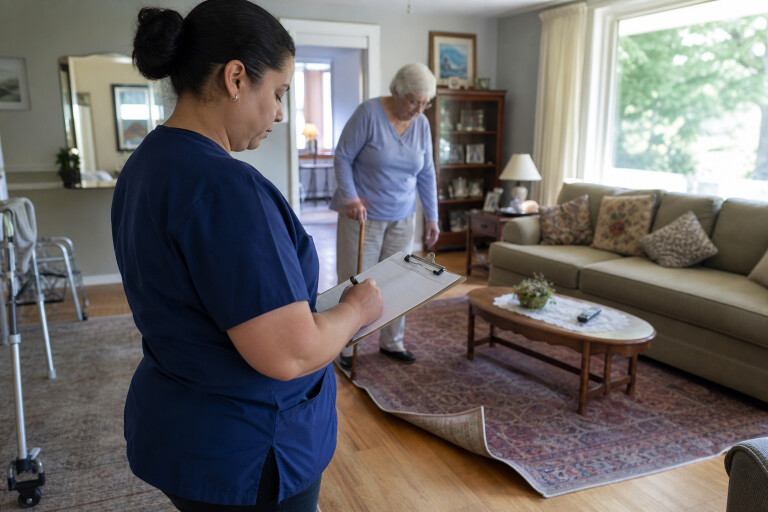
Consider a caregiver arriving for a routine visit at a client’s home. A loose rug blocks the walkway, the client is unsteady, and there is no clear plan for transferring from bed to chair. If the caregiver rushes, a fall or strain could affect the client, the worker, the client’s family, and the agency. A short safety check and a documented escalation process can reduce that risk.
Start With a Simple Risk Inventory
Begin by listing the activities, people, places, tools, and records involved in normal operations. This does not need to be complicated. A solo caregiver may keep a one-page checklist, while a larger agency may assign managers to specific areas.
- List every service provided, including personal care, skilled care, companionship, meal support, or transportation.
- Note where services occur and whether workers travel between homes.
- Identify employees, contractors, supervisors, and outside vendors.
- Record vehicles, medical devices, lifting aids, phones, software, keys, and client records used in the work.
- Mark situations where an error could harm a client, worker, family member, or third party.
Review this inventory whenever the business expands, takes on more complex cases, hires new workers, or begins serving a new geographic area.
Review Client Safety Risks at Each Home
A home safety review should be part of the intake process and repeated whenever the client’s condition or home environment changes. Look for clutter, loose rugs, wet floors, poor lighting, stairs without stable handrails, unsafe equipment, aggressive pets, smoke exposure, and extreme indoor temperatures.
Document concerns using objective notes. For example, write “two loose throw rugs observed between the bedroom and the bathroom” rather than “home is unsafe.” Notify the appropriate supervisor, client representative, or care coordinator when a hazard cannot be addressed immediately. The CDC’s fall prevention resources offer practical ideas that can be adapted for home-based care.
Protect Caregivers From Workplace Hazards
Home health workers face physical and emotional demands that deserve the same attention as client safety. Training should cover safe lifting, repositioning, transfer techniques, infection-control practices, slips and trips, and the proper use of available equipment. Workers should know when to stop a task and ask for help rather than attempting an unsafe transfer alone.
- Set rules for entering homes when there is threatening behavior, unsafe conditions, or aggressive animals.
- Encourage prompt reporting of strains, falls, near misses, and exposure concerns.
- Review workloads so workers are not routinely rushing between visits.
- Guide for supporting clients with dementia, confusion, or behavior changes.
- Build in clear procedures for breaks, check-ins, and emergency contact.
Build a Clear Incident Response Process
Every business should have a consistent process for injuries, missed visits, complaints, property damage, suspected abuse, medication concerns, and near misses. The priority is immediate safety. Call emergency services when needed, then follow the business’s notification procedures.
- Address urgent safety needs and seek medical or emergency assistance when appropriate.
- Notify the supervisor and the authorized client contact as appropriate.
- Document observed facts as soon as possible.
- Preserve relevant visit notes, schedules, messages, and photographs when appropriate and permitted.
- Review the event to determine whether changes to policy, training, staffing, or care plans are needed.
Incident reports should avoid blame, assumptions, and emotional language. Dates, times, locations, people present, observations, actions taken, and notifications made are more useful than opinions about what someone intended.
Keep Records Accurate and Easy to Find
Reliable records may include care plans, visit notes, consent forms, schedules, training files, payroll documents, invoices, incident reports, and client communications. Use consistent dates, times, signatures, and factual descriptions. Paper files should be stored securely, while digital records should have access controls, strong passwords, and a process for removing access when a worker leaves.
Medicare-certified agencies should also understand the role of quality reporting and OASIS-related documentation. CMS provides home health quality information that can help organizations understand reporting expectations, public comparisons, and performance-improvement priorities.
Check Privacy and Communication Practices
Privacy problems can start with a casual text message, a shared phone, paperwork left in a vehicle, or a conversation in a public place. Use approved communication channels for sensitive information, confirm who is authorized to receive updates, and avoid discussing client details in public or where others can overhear.
- Use separate business and personal accounts whenever possible.
- Require strong passwords and screen locks on devices.
- Limit access to records based on job responsibilities.
- Train staff to report lost devices, mistaken messages, and unauthorized access immediately.
Prepare for Staffing, Scheduling, and Travel Problems
Last-minute absences, weather delays, vehicle trouble, and rushed substitutions can increase the chance of missed care or documentation errors. Maintain written backup procedures for coverage, after-hours calls, emergencies, and transportation disruptions. Confirm that each worker has the required credentials, background checks, training, and role-specific skills before assigning a visit.
For staff who drive between homes, establish rules for vehicle maintenance, safe navigation, weather decisions, mileage tracking, and the transportation of supplies or confidential records. Workers should understand the limits of what they are trained and authorized to do, especially when client needs change unexpectedly.
Connect Risk Planning With Business Costs
Risk management is also a financial discipline. Separate fixed expenses, such as software or office costs, from expenses that rise with visits, including payroll, mileage, supplies, training, and overtime. Review contracts for required certificates, limits, or special terms, then compare the cost of prevention with the possible cost of missed visits, damaged equipment, legal assistance, or a client injury.
A Monthly Home Health Care Risk Review
- Review incidents, complaints, and near misses.
- Check staff credentials, licenses, and training deadlines.
- Audit a sample of visit notes for accuracy and completeness.
- Confirm emergency contacts and backup staffing plans.
- Inspect vehicles and frequently used equipment.
- Update the budget after changes in revenue, staffing, or services.
Common Questions From Home Care Business Owners
Is a risk checklist only for large agencies?
No. Solo providers can use a simple checklist, while larger agencies may need assigned responsibilities, audit schedules, and formal follow-up procedures.
How often should a home safety review be completed?
Review the home when care begins, after an incident, after a major health change, or when the physical environment changes.
Can a checklist replace professional advice?
No. A checklist supports everyday planning but does not replace legal, clinical, regulatory, or insurance guidance tailored to a specific business.
Conclusion
A home health care business does not need an overly complex system to manage risk well. Consistent safety checks, thoughtful training, accurate records, practical backup plans, and regular cost reviews can make daily care safer and more dependable. Small monthly actions can prevent larger problems later.