


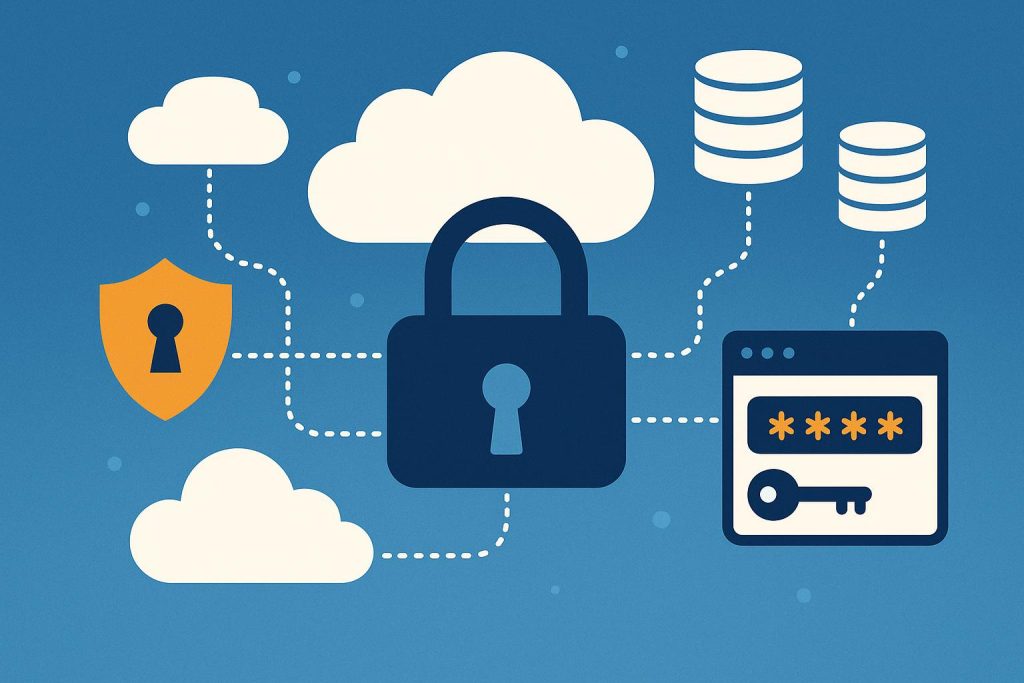
Data is everywhere. Personal devices account for how many steps an individual takes per day and automatically record GPS locations to track other devices, such as laptops and tablets. Smart devices adjust room temperatures based on when a family is home, and front door security cameras alert a homeowner when someone approaches their front door. Past shopping behaviors and a user’s search history logs are identified by social media apps, sending precise marketing messages to the right person at just the right time. These are just a few ways in which data has infiltrated today’s world, embedding itself into everyday modern life.
For organizations, data is spreading just as rapidly. Companies are choosing to adopt multi-cloud strategies to avoid single-vendor lock-in. This scattering of data can be beneficial, but also has some drawbacks. First, it can be financially advantageous to use multiple cloud platforms, with companies being able to “shop around” as opposed to being stuck with one higher-priced provider. It can also ensure business continues as normal if one provider goes offline or there is a major outage.
That said, the more cloud platforms, the more login credentials, which can become a security risk. This is why many organizations are choosing to tighten control of administrative access.
Why Administrative Access Matters for Organizations
Administrative access is the central control point for your organization’s user accounts. Having administrative access gives privileged credentials — or rather, the “keys to the kingdom,” so to speak — to an individual or group of individuals. For organizations, this access used to be granted more freely. An entire IT department was likely to have full access to a company’s network and systems, as were outside security contractors and vendors. While the functions of these roles require high-level access, it doesn’t automatically mean that everyone needs full access to everything at any time.
Unmanaged administrative access can lead to a preventable security breach. If access gets into the wrong hands or is even accidentally shared with the wrong user, an organization’s security is compromised. Soon enough, hackers can install malware, spread viruses across the network, or steal private information. When someone is granted high-level access, human error can also be an unfortunate occurrence. An individual who doesn’t fully understand their level of privilege could click on a harmful link, which could cause a big data breach.
This is why more organizations are tightening control of administrative access, ensuring only exact permissions are granted for employees’ specific jobs.
How Organizations Are Tightening Control of Administrative Access
Organizations are quickly recognizing that shared account access is a huge liability. That’s why many are looking for stricter ways to reinforce administrative access. There are a few ways that organizations can go about this.
The first is Password Management Control, or PAM. PAM limits administrative access by replacing shared, common super-user credentials with a centralized vault of sorts. With PAM, passwords are monitored, controlled, and secured in this vault, providing temporary access only when needed. When a licensed user accesses the vault, their access is tracked within the system for the duration of their session. A cybersecurity vendor can assist in establishing PAM for an organization, eliminating the need for standard access rights and privileges.
Another way organizations are tightening control is through zero-trust architecture. With this principle, no single user or device is trusted by default. This model is built on the rule to “never trust, always verify,” meaning that everyone trying to get administrative access will need to go through the same protocol to gain access. Zero-trust architecture can be established via multifactor authentication (MFA), micro-segmentation, and device health monitoring.
Zero-trust architecture is related to the ideas of least privilege and just-in-time access. Least privilege is the idea of giving users only the bare minimum of permissions to complete a job. Just-in-time access is the understanding that accounts will not have permanent access rights. To put this in practice, instead of having full access to an organization’s tightly secured network, an IT employee, for instance, will only have access at that time for a specific task. Once that task is complete, or when the allotted time is up, the employee will lose that access automatically.
A New World of Stricter Control: What This Means Going Forward
The gradual shift from all-access privileges to higher-level methods of protection will help further secure organizations’ information and hopefully lead to fewer preventable security breaches. From an operational standpoint, IT departments will no longer be given permanent, high-level rights. Instead, the use of least privilege, just-in-time access, and zero-trust architecture modalities will be put in place. These systems won’t limit IT teams from doing their job; rather, they will reinforce stricter control for everyone.
A byproduct of stricter control is less human error and clearer accountability. IT employees should feel more empowered and confident in their roles, knowing that a larger security standard is put in place. As a result, their specific roles and responsibilities are clear, and workers feel a sense of true safety. This also means more streamlined processes, reducing the tedious, manual work of continuous monitoring and reporting.
So while administrative access may be harder to maintain, it will be more protective. Organizations will feel better about a multi-cloud strategy, knowing that high-level permissions are constantly being monitored.