


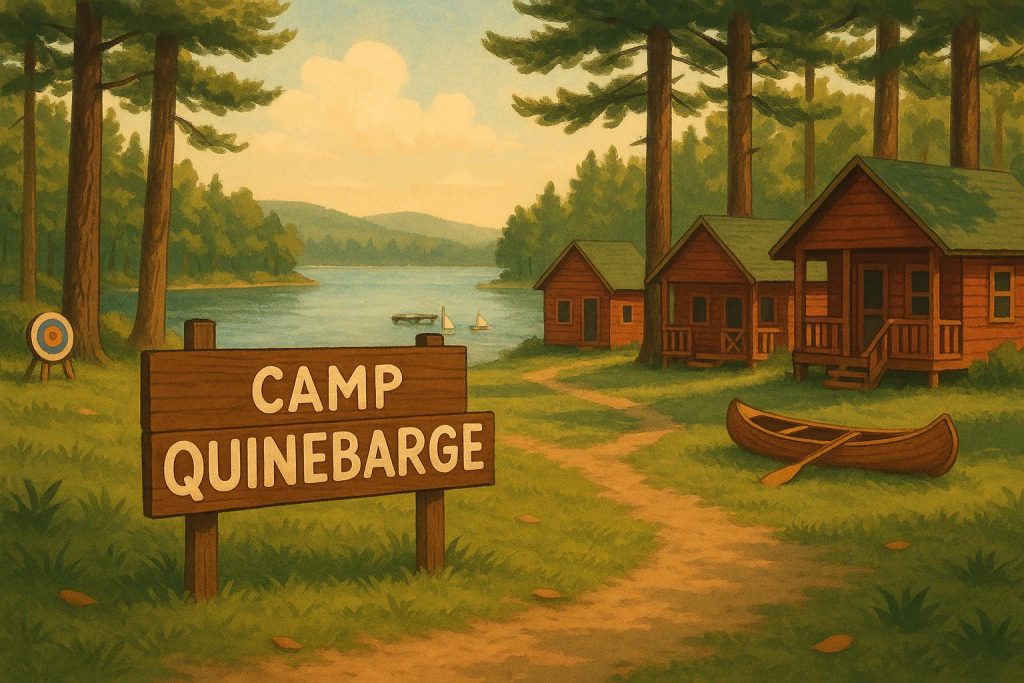
Established in 1936, Camp Quinebarge is a youth summer camp in Moultonborough, New Hampshire, known for its focus on kindness, friendship, and personal growth. Situated on 70 acres of wooded forest and lakefront along Lake Kanasatka, the camp provides a structured environment where children ages 6 to 16 participate in a wide range of activities while building independence and social skills. With decades of leadership, evolving from its founding by Tom and Ruth Kenly to its current stewardship by former campers, Camp Quinebarge reflects a longstanding tradition of summer programming. Its daily routines, activity schedules, and emphasis on community offer a clear example of how a typical sleepaway camp day is organized to balance structure, recreation, and personal development.
What a Typical Day Looks Like at a Sleepaway Summer Camp
A typical day at a sleepaway summer camp follows a predictable schedule that balances meals, activity time, and rest. Sleepaway camp means campers stay overnight in cabins with peers their age and counselors who stay with the group. For many families, the daily routine matters because it affects how quickly a child settles in.
Most mornings start inside the cabin. Campers wake up, get dressed, and handle cabin basics like making beds and putting away clothes. Cabin counselors help younger campers learn this pattern, especially early in the session.
Breakfast is the first full-group meal and often sets the tone for the day. Campers sit with friends from their’s or other cabins while counselors keep an eye on pacing and cleanup. Some camps also use this gathering to share schedule reminders, weather updates, or what campers should bring to the next activity.
After breakfast, the camps move into morning activity blocks. Each block is a set period when cabin groups rotate into program areas. Depending on the camp, activities may include arts and crafts, archery, field sports, or nature skills. Instructors run the sessions, while cabin counselors handle transitions and attendance so campers know where to be.
Swim lessons or supervised swim time are also common, especially at camps with a lake or pool. Trained staff members manage the waterfront and supervise campers in the water. When swim time happens regularly during a session, many campers become more comfortable through repeated practice.
Lunch comes after a full morning of movement and usually slows the tempo. Dining staff run service, and counselors keep cabin groups moving through lines and back to tables. Many camps also work with families in advance to prepare for food allergies or dietary needs so campers can eat safely at each meal. Because everyone gathers in one place, lunch also gives staff a chance to see how campers are doing before the afternoon schedule begins.
After lunch, many camps build in a rest hour or quiet time back in the cabin. Campers might read, write letters, play cards, or take a quick nap while counselors keep the space calm. A camper who felt homesick earlier may settle during this window by writing a note home or sitting with cabin mates. This pause gives campers a break before returning to structured afternoon activities.
Afternoon activity blocks often lean more skill-focused. When campers return to the same program area multiple times across the week, they improve through practice that builds day to day. A camper might build on boating instruction, keep shaping a woodshop project, or run drills with a team.
Many camps also include a free choice period later in the day. After structured programming, campers choose from approved options such as another waterfront slot, a craft table, or a pickup game. Staff stay posted in each area, and campers use the time to follow interests and meet up with friends.
Dinner often feels like the most social meal because it brings the camp back together again. After dinner, camps usually schedule an organized evening activity, sometimes full-camp and sometimes cabin-based. Games, performances, cabin challenges, and campfires give campers a shared way to end the day.
At the end of the night, cabins shift into bedtime routines. Campers rotate through showers, change clothes, and set out what they will need for the next morning while counselors manage quiet hours and lights-out. Once the pattern clicks, the day stops feeling like a list of instructions and starts feeling livable.
About Camp Quinebarge
Camp Quinebarge is a summer camp in Moultonborough, New Hampshire, founded in 1936 and located on Lake Kanasatka. It serves children ages 6 to 16 with a range of activities including boating, swimming, arts and crafts, and hiking. The camp emphasizes kindness, friendship, and personal responsibility while maintaining partnerships with organizations such as the American Camp Association and the New Hampshire Camp Directors Association. It continues to be operated by a new generation of former campers.