


Gunnari Auvinen is a software engineer based in Cambridge, Massachusetts, with more than a decade of experience designing and maintaining large-scale systems. In his current role as a staff software engineer at Labviva, Gunnari Auvinen leads architectural planning, code reviews, and system design initiatives that support complex, data-driven business operations. His work has included conducting gap analyses to guide process improvements, serving as technical lead for next-generation order processing systems, and supervising infrastructure modernization efforts.
Before joining Labviva, Gunnari Auvinen held senior engineering roles at Turo and Sonian, where he worked on API development, platform modernization, and full-stack applications using technologies such as React, Ruby on Rails, and distributed service architectures. He holds a degree in electrical and computer engineering from Worcester Polytechnic Institute. Across these roles, his experience has centered on building reliable systems and helping organizations understand how technical decisions influence operational outcomes, a perspective that aligns closely with the growing need for transparency in AI-driven decision-making.
Why Businesses Need to Understand How AI Makes Decisions
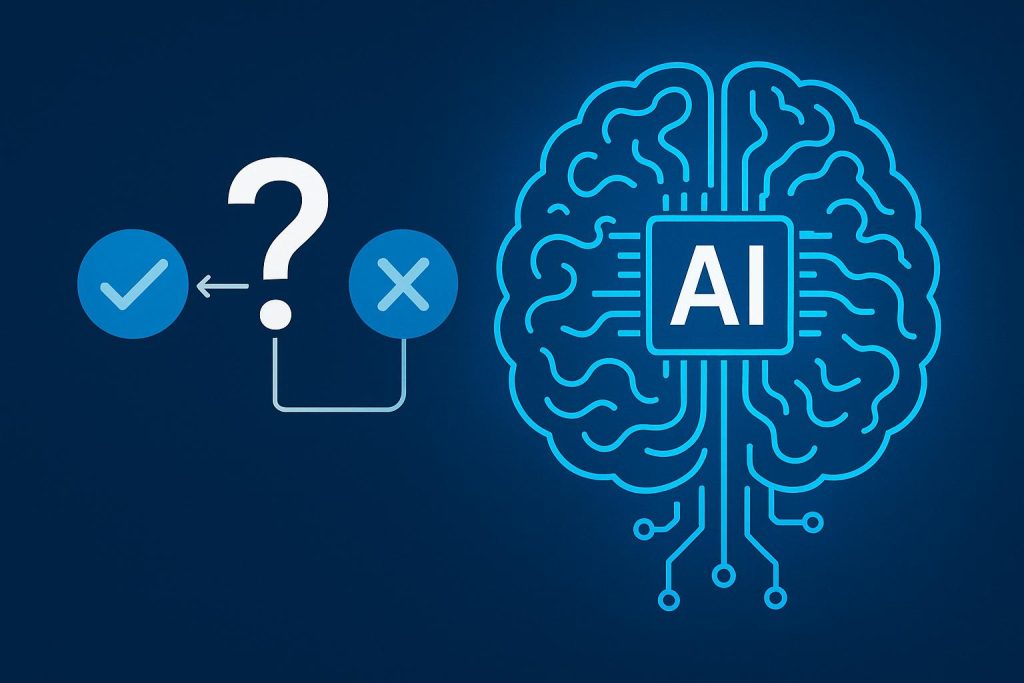
As artificial intelligence becomes embedded in business workflows, companies face a growing challenge: understanding how automated systems arrive at their conclusions. From recommending job candidates to flagging transactions as fraudulent, AI now plays a role in decisions that affect people, money, and compliance risk. These outputs can function like opaque systems whose logic businesses cannot easily observe, especially when teams must explain decisions during audits, regulatory reviews, or customer escalations.
Model interpretability refers to the ability to explain which input features influenced a model’s decision in a way that humans can follow. A system might produce accurate results, but without an explanation, teams struggle to verify outcomes or fix errors. In practice, teams often use “interpretability” for models that are understandable by design and “explainability” for post-hoc methods that clarify specific outcomes from complex models. These tools provide reviewers with case-specific evidence of what drove a result, even when the model’s internal steps are hard to describe.
When teams lack usable explanations, they can encounter practical friction. Compliance staff may request decision rationales for internal audits, regulatory reviews, or external inquiries. Without clear explanations, teams may pause approvals, extend review cycles, or miss documentation expectations, which can slow deployment even when a model produces accurate results.
Two commonly used explanation methods, SHAP and LIME, help teams explain individual decisions. SHAP estimates how much each input contributed to a prediction, and LIME fits a simple local model around a single decision to approximate which inputs mattered most. Teams can add these methods to existing workflows, provided they capture the inputs and outputs needed to generate a clear rationale.
In practice, teams use explanation tools to support structured review. When a model denies a loan application, a reviewer using SHAP might identify low income and recent delinquencies as the most influential inputs. This transparency helps legal, risk, and customer support teams document reasoning, check consistency, and respond to questions.
Interpretability also improves coordination among teams that review AI-driven outcomes. When explanation outputs show how inputs influenced a decision, technical and non-technical reviewers can assess the same evidence. This shared reference point reduces confusion and helps teams resolve edge cases faster without relying on engineering to translate the result.
When an automated system produces an error or a decision that appears unfair, reviewers rely on explanation tools to trace the inputs driving the outcome and check whether it matches policy intent. Without that visibility, teams may struggle to correct the error, defend the result, or respond to stakeholders.
Some teams worry that interpretability compromises performance. In practice, organizations in areas such as fraud detection or credit risk scoring can pair complex models with SHAP or LIME post-prediction to support oversight and accountability. Other teams apply these methods only in workflows that trigger formal review or higher risk.
Business leaders do not need to master technical details, but they do need to ask targeted questions. Can teams explain this decision with SHAP or LIME, and can they show which inputs mattered most? These questions help leadership judge whether a system is suitable for deployment, monitoring, and escalation.
As AI adoption scales, organizations that build interpretability and explainability into their systems from the start are better positioned for long-term oversight. Early investment can improve reviews, speed responses to breakdowns, and strengthen accountability as systems evolve. Over time, explainability becomes part of how the organization runs AI day to day.
About Gunnari Auvinen
Gunnari Auvinen is a staff software engineer with Labviva, where he focuses on system architecture, distributed services, and large-scale application design. With prior experience at Turo, Sonian, and General Dynamics, he has led platform modernization efforts and complex system integrations. A graduate of Worcester Polytechnic Institute in electrical and computer engineering, Gunnari Auvinen brings a practical, systems-oriented perspective to building transparent and reliable technology.