


There’s no question about it: Gen Z is a generation unlike any other. They are the most diverse and technology-savvy group of individuals.
Who qualifies for this generation depends on who you ask or what online publication you read. But for this article, we’ll stick with the Pew Research Center definition of anyone born between 1997 and 2012.
The significance for marketers is not simply that Gen Z is younger or more digitally active. The bigger shift is how quickly their expectations move across channels. A brand may first appear in a social feed, continue the interaction through personalized email, and eventually earn trust through useful service or a credible recommendation.
That makes consistency across the customer journey especially important when building long-term relationships with this audience.
Those shifts are especially visible in Gen Z’s habits around social media, personalization, and entrepreneurship. Understanding those behaviors can help businesses make their marketing more relevant to this audience.
In this article, we’ll look at three ways brands can connect with Gen Z and build stronger customer relationships.
Let’s dive in.
Gen Z spends more than 5 hours a day on social media
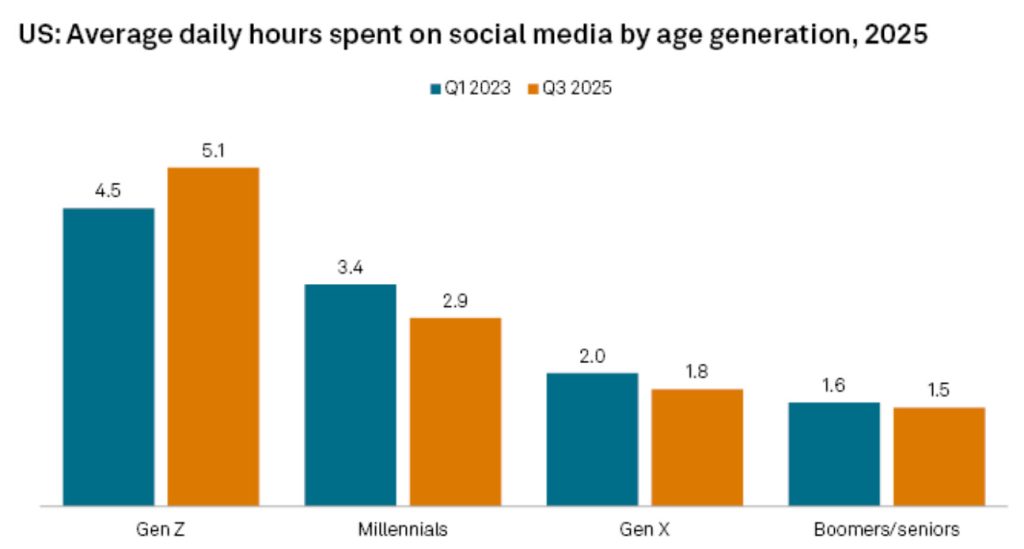
Gen Z is a digitally native generation. According to S&P Global Kagan research, U.S. Gen Z adults spend more than five hours a day on social media, substantially more than older generations.
Image source
For marketers, that means content has to earn attention in an exceptionally crowded feed.
Standing out does not mean making every post louder or more promotional. It means adapting the message to the platform and giving people a reason to stop scrolling.
Short videos can explain a product quickly, while behind-the-scenes clips, demonstrations, and customer-focused content can make a brand feel more accessible. The format should support the message, not distract from it.
For example, instead of using boring product photos to promote your ecommerce store on Instagram, use graphic design templates to elevate your images.
You should also prioritize the social media platforms your audience uses most. For instance, TikTok gives brands a natural way to reach Gen Z through relevant short-form video content.
Different platforms can also support different stages of the customer journey. A short video may introduce the brand, while a website or email can provide the detail someone needs before deciding. Connecting those touchpoints helps brands turn social attention into a clearer path for interested customers.
It doesn’t matter if your business focuses on financial topics like maximizing credit card rewards or selling sneakers. TikTok is a great place to capture Gen Z’s attention.
The key takeaway? Use social media consistently to stay visible on the platforms Gen Z already uses.
On Instagram, visibility also depends on maintaining an active audience. Brands focused on growing followers should pair that reach with useful content and genuine engagement rather than treating follower count as the end goal.
Consistency also matters operationally. Posting regularly is useful, but brands should also pay attention to which topics, formats, and calls to action actually generate engagement. Reviewing that performance over time can help marketers spend less effort on content that falls flat and more on the formats that repeatedly connect with their audience.
Invest in marketing software to help you schedule, analyze, and execute your social media marketing campaigns so you can keep up with this digital generation.
Gen Z wants real connections with brands
Contentstack’s 2025 personalization research found that 45% of online shoppers actively seek brands that provide personalized digital experiences, with Gen Z buyers 40% more likely than average to say so.
Image source
Thankfully, it’s easier than it sounds. A customer data platform helps you collect first-party data from customers who interact with your website or engage with your social media accounts.
Using this data, you can send personalized emails that let leads know when a new product launches. Or if they abandoned something in their cart, you can send them a discount code for a future purchase. The goal is to make the shopping experience as seamless as possible and help them pick up where they left off.
Personalization works best when it reduces customer effort instead of making the experience feel intrusive. Useful examples include remembering product preferences, showing relevant recommendations, or following up when someone leaves an item in their cart.
These small touches can make the buying process feel more convenient while still giving customers control over how they interact with the brand.
That relevance also depends on transparency. Brands should explain why they collect customer information and how they use it to improve the experience. Clear preference settings, straightforward opt-outs, and useful recommendations can make personalization feel intentional rather than intrusive.
This gives customers more control while still allowing marketers to create experiences that reflect individual interests and behaviors.
Another way to build a more genuine connection with Gen Z is through influencers. Influencer recommendations can matter a lot to this audience. A 2025 Clutch survey found that 55% of Gen Z respondents said they trust influencer recommendations.
It’s all about brand authenticity — Gen Z wants to buy from brands they trust, and when they hear about brands from people they trust, they’re more willing to try something new. Consistent, authentic interactions also strengthen your online reputation.
The same principle applies to influencer partnerships. A large audience alone does not make a creator the right fit. Brands should look for creators whose content, audience, and values fit the product being promoted.
A relevant partnership is more likely to feel like a natural recommendation, while a poor fit can make the promotion feel forced and weaken the trust the campaign is supposed to build.
Influencers are powerful, but don’t forget to build trust the “old-fashioned” way by offering the highest-quality product or service.
For example, as an ecommerce store, you can partner with a courier service to offer same-day delivery and a lenient return policy.
Quick service and easy returns can also reduce friction for customers making trend-driven purchases.
Trust also continues after the purchase. Fast delivery, straightforward returns, responsive support, and clear communication all shape the experience customers remember.
These details may seem less visible than an influencer campaign, but they determine whether marketing promises match the service customers actually receive.
Gen Z has the entrepreneurial bug
Gusto’s 2026 New Business Formation Report found that Gen Z accounted for 9% of new U.S. businesses started in 2025, surpassing Baby Boomers at 5% for the first time.
For new founders, digital tools can also make early branding tasks faster and more accessible. An AI-powered headshot generator can help create a professional profile image without arranging a traditional photoshoot, making it easier to establish a polished online presence.
This entrepreneurial interest also changes how some brands should frame their offers. Gen Z founders may look for tools and services that help them launch, manage, or promote a business, so marketing should clearly explain the product’s practical value.
Instead of relying on broad promises, brands can show how a service fits into a specific part of the process, such as creating a brand identity, reaching customers, or managing day-to-day operations.
For businesses offering those kinds of services, the next challenge is communicating that value in a way that fits how younger audiences already consume content. As discussed earlier, being active on social media can attract Gen Z and build rapport.
For instance, Tailor Brands uses short-form video content and popular memes to connect with Gen Z instead of relying only on LinkedIn.


(Image source)
The Tailor Brands example works because the company isn’t just discussing entrepreneurship; it is presenting business ideas in formats that already feel familiar on social media.
Other brands serving young founders can take a similar approach by translating useful business information into concise, accessible content without making every post a direct sales pitch.
Use this trend to your advantage by including Gen Z when marketing products or services related to entrepreneurship.
For businesses targeting young founders, this creates room for educational and promotional content. A company can explain a process, answer a common business question, or show how a tool is used before asking for a sale.
That approach gives potential customers something useful while helping the brand demonstrate its relevance to the problems they are trying to solve.
Gen Z’s growing influence also extends to the workplace. For companies hiring younger employees, employee experience software can provide clearer channels for communication, feedback, and participation that fit a more digital-first workforce.
Wrapping up
Gen Z’s influence is increasingly visible in how younger consumers discover brands, respond to personalization, and approach entrepreneurship. Brands that adapt to those behaviors can build more relevant customer experiences.
The common thread across all three areas is relevance. Gen Z does not require an entirely separate marketing playbook. Still, brands do need to pay attention to where these consumers spend time, what makes interactions useful, and how trust is built across different touchpoints.
For a broader framework, DataFileHost’s digital marketing strategy for small business guide explains how to turn audience insights into practical channel and content decisions.
Author Bio:


Ryan Robinson. I’m a blogger, podcaster, and (recovering) side project addict who teaches 500,000 monthly readers how to start a blog and grow a profitable side business at ryrob.com.