


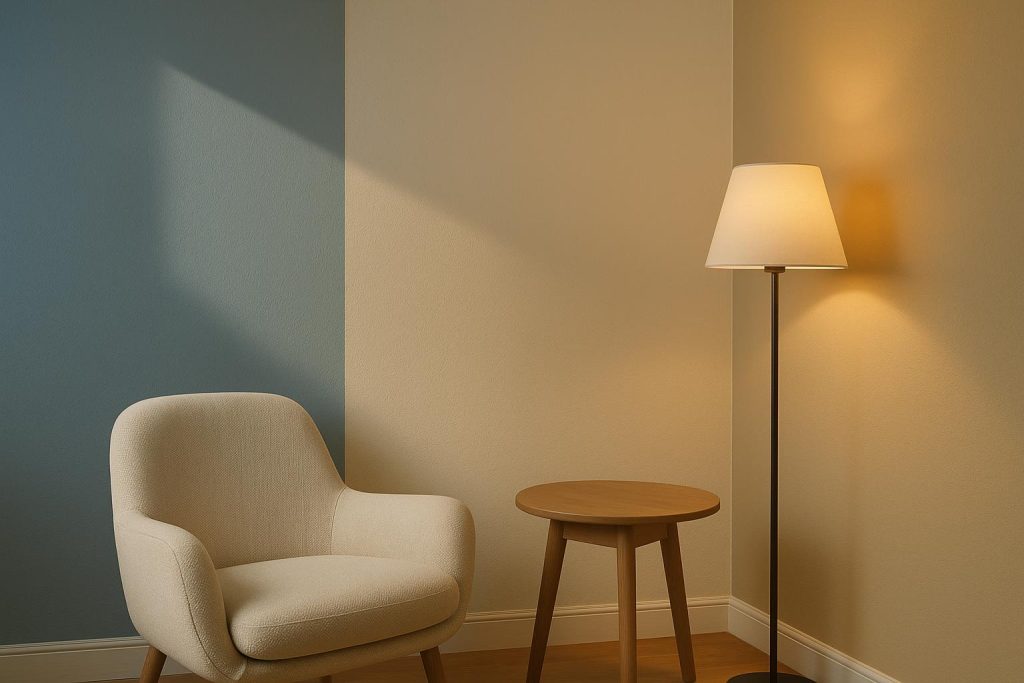
Choosing the right wall colour combination is not just about selecting the popular shade. Natural and artificial lighting can change how the same colour appears and can change at different times of the day.
The right wall paint colour not only reflects natural light but also looks elegant and bright. In this blog, we will understand in detail how lighting affects the wall colour combinations.
How Light Affects Wall Colour Combinations?
Lighting plays an important role in how a wall colour combination appears in your home. Rooms with good natural light tend to make colours appear brighter and more vibrant and spaces with limited daylight can make the same shades look a little darker. For instance, north-facing rooms typically receive cooler, softer light that can make colours appear more muted, whereas south-facing rooms enjoy warm sunlight that enhances the richness of many shades.
Popular Wall Paint Colour Option That Compliments Light
Here are some popular colour choices that complement natural and artificial lighting.
Sage Green and Off-White
One popular wall colour that creates a clean, seamless look is sage green paired with off-white. Sage green softens harsh natural sunlight, preventing the room from feeling overly bright, while off-white reflects light, making the space feel open and airy. Together, they create a balanced and calming ambience throughout the day.
Warm Cream and Terracotta
Warm cream is the colour that reflects both artificial and natural light, which makes a room brighter and more spacious. In comparison, terracotta adds depth and warmth to the room. This combination helps in creating a cosy and welcoming atmosphere, which is ideal for the bedroom and living room.
Pastel Blue and White
Pastel blue reflects natural light and creates an airy, fresh space. On the other hand, white increases brightness by scattering light evenly across the room. Both colours make space feel cool, open and visually spacious, particularly in rooms with plenty of daylight.
Soft White and Beige
Soft white also maximises light reflection; it makes the room feel larger and more spacious. At the same time, the beige colour adds subtle warmth to the room while maintaining a high overall level of light reflectivity.
Light Grey and White
Light grey is the colour that adapts to different lighting conditions. For example, it looks more refined in artificial light and gentle and soft in daylight. On the other hand, white helps reflect light throughout the room. This combination creates a balanced visual appeal.
Tips to Choose the Right Colour for Wall
Choosing the right wall colour combination is easy when you consider both the lighting factor and your home aesthetics. Here are some tips to choose the right wall colour combination:
- Before beginning the wall painting process, carefully observe the natural light in the room.
- Also factor in whether the room has ventilation, like a window or an attached balcony or any other lighting source.
- Doing a sample colour patch test is essential to choose the right wall colour combinations.
- Choose colours that suit the function and mood of the space, such as calming shades for bedrooms and brighter tones for living areas.
- Choose paint finishes based on the amount of light and the condition of your walls.
Conclusion
Lightning can significantly impact how the home colour designs appear. From the direction of natural sunlight to the type of artificial lighting you use, each factor can alter the appearance of a wall colour combination.
Trusted brands like JSW Paints offer a wide range of colour options that can make space feel bright and spacious. You can view the JSW Paints shade guide to choose the best colour based on your preferences.