


Matthew Teltser is a cardiologist with more than three decades of experience in clinical practice, most recently serving patients in Davie, Florida, at Associates MD. Matthew Teltser has focused on areas such as lipidology, hypertension, and nuclear cardiology, bringing extensive expertise to the management of cardiovascular risk. Over the course of his career, he has held leadership roles including chief of cardiology and Department of Medicine chairman at Memorial Hospital Pembroke, and he founded the University Heart Institute in Pembroke Pines. A fellow of the American College of Cardiology, he has also contributed to medical education as an instructor and has completed advanced fellowship training. His background provides a relevant perspective on evolving lipid-lowering therapies, including PCSK9 inhibitors and inclisiran.
Understanding Advances in PCSK9 Inhibitors and Inclisiran
For decades, statins have been the foundation of cholesterol management. They remain highly effective and are still the first-line therapy for lowering low-density lipoprotein (LDL) cholesterol. Yet many patients do not reach recommended LDL targets with statins alone, and some are unable to tolerate them. In recent years, newer therapies have emerged that are reshaping how clinicians approach lipid management, particularly for those at higher cardiovascular risk.
Among the most important advances are PCSK9 inhibitors and inclisiran. Both target a protein called PCSK9, which plays a key role in regulating LDL receptors in the liver. These receptors are responsible for clearing LDL cholesterol from the bloodstream. When PCSK9 activity is high, fewer receptors are available, and LDL levels rise. By interfering with this pathway, these therapies enhance the liver’s ability to remove LDL cholesterol, leading to substantial reductions.
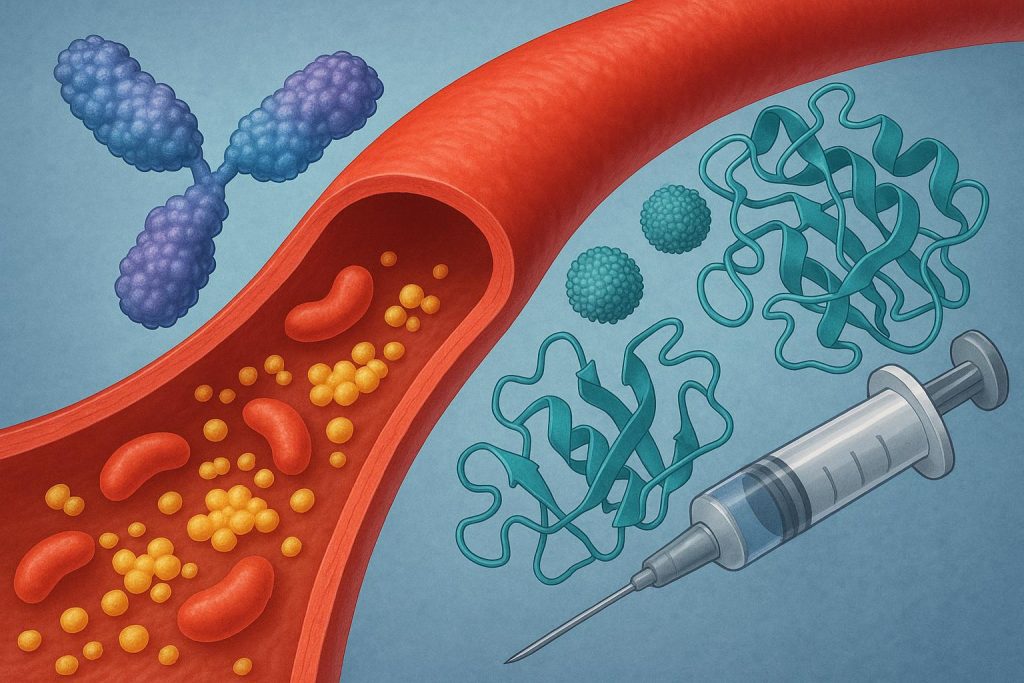
PCSK9 inhibitors are monoclonal antibodies that bind directly to the PCSK9 protein. Medications in this class, such as evolocumab and alirocumab, are given by injection every two to four weeks. Clinical trials have shown that they can lower LDL cholesterol by about 50 to 60 percent on top of statin therapy. More importantly, they have been shown to reduce the risk of heart attack, stroke, and other cardiovascular events in high-risk patients.
Inclisiran works differently but targets the same pathway. It is a small interfering RNA therapy that reduces the liver’s production of PCSK9. Rather than binding the protein itself, it prevents it from being made. Inclisiran is administered less frequently, typically twice a year after initial dosing, which may improve adherence for some patients. Like PCSK9 inhibitors, it produces substantial and sustained reductions in LDL cholesterol.
The question for patients and clinicians is not whether these therapies work, but when to use them. Current guidelines generally recommend starting with lifestyle changes and statin therapy. If LDL levels remain above target despite maximally tolerated statins, the next step is often to add another oral medication such as ezetimibe. If goals are still not achieved, or if the patient is at very high risk, PCSK9-targeting therapies may be considered.
This stepwise approach reflects both clinical evidence and practical considerations. PCSK9 inhibitors and inclisiran are highly effective, but they are also more expensive than traditional therapies. As a result, they are typically reserved for patients who stand to benefit the most. This includes individuals with established cardiovascular disease, those with familial hypercholesterolemia, and patients with persistently elevated LDL levels despite standard treatment.
Another important role for these therapies is in patients who cannot tolerate statins. While true statin intolerance is less common than often perceived, it does occur. In such cases, PCSK9 inhibitors or inclisiran provide alternative pathways to achieve meaningful LDL reduction without relying on statins.
These newer agents are also changing how clinicians think about treatment goals. With the ability to lower LDL cholesterol to very low levels safely, there is growing acceptance of more aggressive targets in high-risk patients. This represents a shift from earlier eras, when treatment options were more limited and goals were less ambitious.
Safety profiles for both PCSK9 inhibitors and inclisiran have been favorable in clinical trials. The most common side effects are mild injection site reactions. Long-term data continue to accumulate, but current evidence supports their use in appropriately selected patients.
Lipid management is no longer limited to a single class of drugs but has become a more flexible and individualized process. For patients at high risk, this means more opportunities to reduce cardiovascular events. For clinicians, it offers new tools to close the gap between recommended targets and real-world outcomes.
About Matthew Teltser
Matthew Teltser is a cardiologist with over 30 years of experience in Florida, specializing in lipidology, hypertension, and nuclear cardiology. He has held leadership roles at several Memorial Hospital facilities and founded the University Heart Institute in Pembroke Pines. A fellow of the American College of Cardiology, he completed his medical degree at the University of Medicine and Dentistry of New Jersey and a cardiology fellowship at the University of Florida in Jacksonville.