


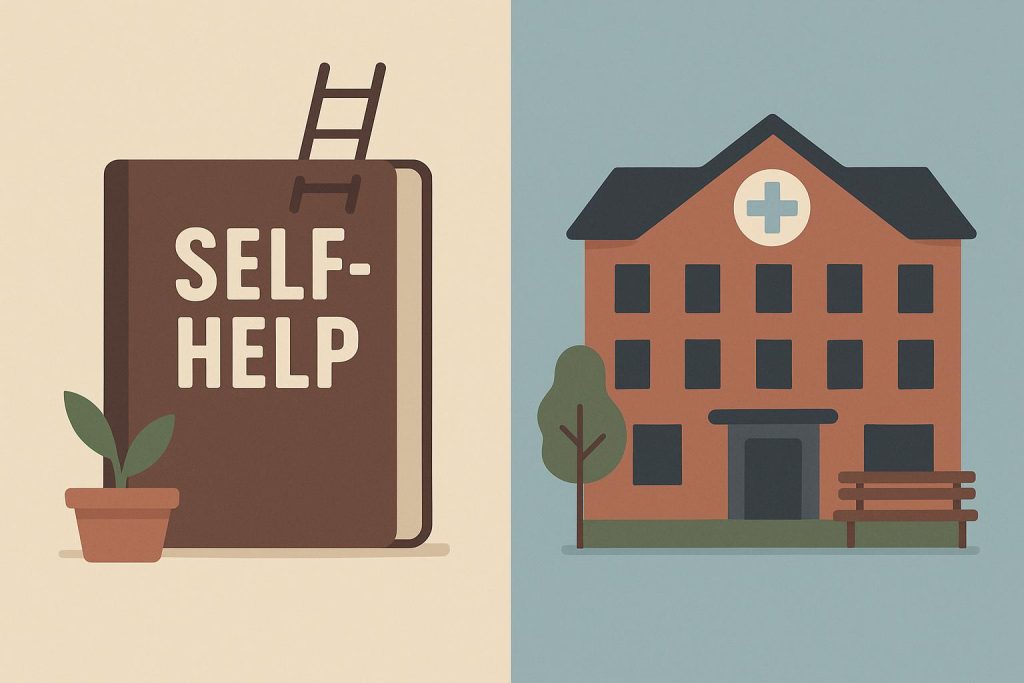
Self-help meetings keep many people sober, but they are not the same as treatment. When substance use is moderate to severe, or when mental health symptoms are part of the picture, peer support alone often falls short and structured clinical care is needed.
Self-help is powerful but it is not treatment
Walk into a church basement or community hall and you’ll find something rare. Strangers tell the truth about alcohol and drug use, and no one charges a fee or asks for credentials.
That honesty is why AA, NA, SMART Recovery, and other peer groups have lasted for decades. People meet others who don’t judge and who understand what they are going through. The meetings are free and open to anyone. They add structure to the week and provide a place to be known, but they don’t diagnose or treat.
Peer leaders are not clinicians. They can’t order lab work or spot withdrawal risk the way a nurse can, and they can’t prescribe medication to curb cravings. They can share their experience and remain present when someone needs support.
Relapse prevention in this setting means hearing how others avoided a drink or drug use episode and borrowing those ideas. That can work when triggers are light and life is fairly steady. It can break down quickly when cravings hit daily and sleep, mood, pain, and appetite feel unmanageable. There is no clinical care plan, and no one tracks progress over time. You show up because you choose to, which is both the strength and the limit.
Twelve-step rooms lean on shared stories and sponsors. SMART Recovery uses practical tools for urges, thoughts, lifestyle balance, and sleep habits. Both ask for honesty and steady attendance. Neither can diagnose depression or adjust medication when mood drops. People often try both styles before finding the right fit.
Addiction severity should decide the level of care
Addiction is not a failure of will. Research on brain reward and stress circuits shows why addiction acts like a brain disease and why logic often loses to craving. That biology is why clinicians allow severity, rather than preference, to guide care.
Clinicians use the American Society of Addiction Medicine criteria to match people to care based on withdrawal risk, medical needs, mental health symptoms, and home stability. The framework sorts help into steps that run from detox and residential care through daytime structured care, then to less frequent outpatient visits. Self-help sits outside that clinical ladder as peer maintenance and community support. It helps people stay connected after or alongside treatment, but it cannot adjust the dose or method when symptoms spike. Return to use is common, with 40% to 60% of people returning to substance use after a treatment episode (NIDA).
Someone with daily heavy use and past failed attempts needs more than a weekly meeting. Someone with stable housing and work, along with months of abstinence, may do well with peer support and brief check-ins.
Severity should set the dose.
Detox comes first when the body depends on alcohol or drugs and stopping brings shakes, nausea, panic, and sweats. Residential care keeps people overnight when home life is unsafe or cravings feel constant. Daytime structured care suits people who are medically stable but still need daily clinical contact. Less intensive outpatient care fits later, when symptoms ease and skills hold.
What daytime structured care looks like in practice
A partial hospitalization program is daytime addiction treatment without an overnight stay. People attend most days for several hours and sleep at home. It is classed as Level 2.5 care for those who need more than weekly visits but don’t require 24-hour supervision. Daily support can be particularly useful when it starts soon after detox or a residential stay.
Most schedules run 20 or more clinical hours each week, while a self-help meeting lasts about an hour. That gap matters because change takes repetition. A typical week includes psychiatric review, individual therapy focused on thought and behavior patterns, medication support, and clinician-led group work. Family sessions and case help with housing and work round out the plan for many people. No peer meeting can prescribe or adjust that mix when progress stalls.
Daily contact allows people to practice coping skills at night in their own home and review what worked the next morning. Those who see that rhythm as a fit for their needs can discover programs built around structured care that meet during the day and taper as stability grows.
Group therapy in this setting differs from a peer share. A clinician guides the conversation and keeps it tied to treatment goals. Individual work often uses cognitive behavioral therapy to test beliefs that drive alcohol and drug use. Detox, when needed, happens before this phase, while rehabilitation here means building steady daily habits that hold after discharge. Each week ends with a written plan covering triggers and who to call first.
Why co-occurring mental health changes the math
Many people who seek help for substance abuse also live with anxiety or depression. When mood fuels use and use worsens mood, treating one without the other rarely holds.
Peer rooms welcome conversations about those struggles, but they can’t treat them. A partial hospitalization program starts with a full psychiatric review and continues with regular medication checks. In medication-assisted care, approved medicines such as buprenorphine and naltrexone can lower cravings for some opioid or alcohol problems. Only a clinical team can prescribe and track them. Therapy addresses both sides at once, using skills for panic, low mood, trauma responses, and cravings. This paired approach to co-occurring needs is a central reason daytime clinical care can help when meetings alone stall.
Sleep loss is a clear example. A peer can suggest rest, but a clinician can screen for depression and teach a wind-down routine. Without that second layer, people often cycle between brief sober spells and a return to use.
Trauma adds another layer. Many people arrive with old wounds that become more intense during early abstinence. Peer stories can offer comfort, yet flashbacks and severe anxiety need guided care. Integrated teams keep addiction treatment and mental health care in one dual-diagnosis plan, allowing progress in one area to support the other.
Family strain often feeds substance use. Loved ones swing between anger and rescue, and conversations at home become tense. Structured care brings them into sessions to set limits that still show care. Peers can share what worked in their own homes, but they can’t guide a family through relapse plans and safety steps.
Accountability looks different in a clinic than in a meeting
Meetings run on goodwill. You sign no roster, and no one calls if you skip a week.
Daytime clinical care follows a set schedule with clear expectations. Each day begins at a set time with groups and check-ins that build on the day before. Clinicians track attendance, mood scores, participation, and sleep logs, so drift becomes visible quickly. Scheduled drug and alcohol screening provides objective confirmation that words match actions. The structure is not designed to punish. It identifies trouble early, while an adjustment may still help.
Self-help relies on self-report. That trust is welcoming, but it can allow denial to hide. People may attend for months while substance use continues in secret. A clinic pairs trust with testing and daily contact, helping to prevent small slips from growing into longer runs.
Clinicians also ask about rent, transportation, work shifts, and childcare because those details affect attendance. Case teams help arrange sober housing and job plans alongside therapy. Meetings can’t resolve those pressures, although members often share useful tips.
Morning often begins with a brief check on sleep and cravings, followed by a plan for the day. Midday brings group work and a one-to-one session to review progress. Afternoons may include family discussions or job and housing planning with a case worker. Evenings return people home to test those tools where everyday life happens.
The honest tradeoffs of time and money
A weekly meeting costs nothing and takes an hour. Daytime clinical care occupies most of the day, several days a week, and it bills like medical care. That difference is real, and families should weigh it carefully.
Residential stays remove people from home for weeks and pause work and family roles. Daytime care avoids that interruption while still providing daily help. People sleep in their own beds and face real triggers at night with a plan made that day. They return the next morning to discuss what helped and what failed. Daily practice in real life can cement skills faster than lessons learned far from home.
Still, daytime care isn’t light. It requires transportation, time off, energy, and focus for difficult conversations day after day.
PHP also isn’t right for everyone, nor is it the last stop for most. Many people step down to an Intensive Outpatient Program (IOP) with fewer hours, followed by standard outpatient check-ins. Others need a higher level first, such as medical detox or an overnight stay, before daytime care is safe. A brief assessment sorts that out and helps people avoid paying for more or less care than they need.
Employers often allow medical leave for daytime care when a note outlines the schedule. Evenings remain free for family meals and rest. That balance can keep income and personal ties intact while treatment continues.
When meetings alone are not enough
Four signs point toward clinical help. Use has become daily and heavy, with failed attempts to stop in the past. Stopping brings shakes, nausea, panic, and sweats, or sleep and mood deteriorate sharply. A mental health strain runs alongside use and makes abstinence feel out of reach. Previous meetings helped for a week or two, but use returned when stress increased.
None of those signs means failure. They show that the problem needs a higher dose of care.
Formal care and peer support often work best together. Many people finish daytime treatment and continue attending 12-step meetings and SMART Recovery groups for friendship and routine. Clinicians often encourage that combination because peers keep recovery visible through steady weeks and difficult ones. Treatment teaches skills and steadies health, while meetings keep people connected to others facing the same struggle.
If doubt remains, ask for a level-of-care review. It takes under an hour in most clinics and maps symptoms to the appropriate step. That conversation can save months spent trying a method that was never designed for the job.
Courage gets people to a first meeting, and wisdom keeps them honest about what that meeting can do. Match the help to the severity and let peer support carry forward what clinical care starts.