


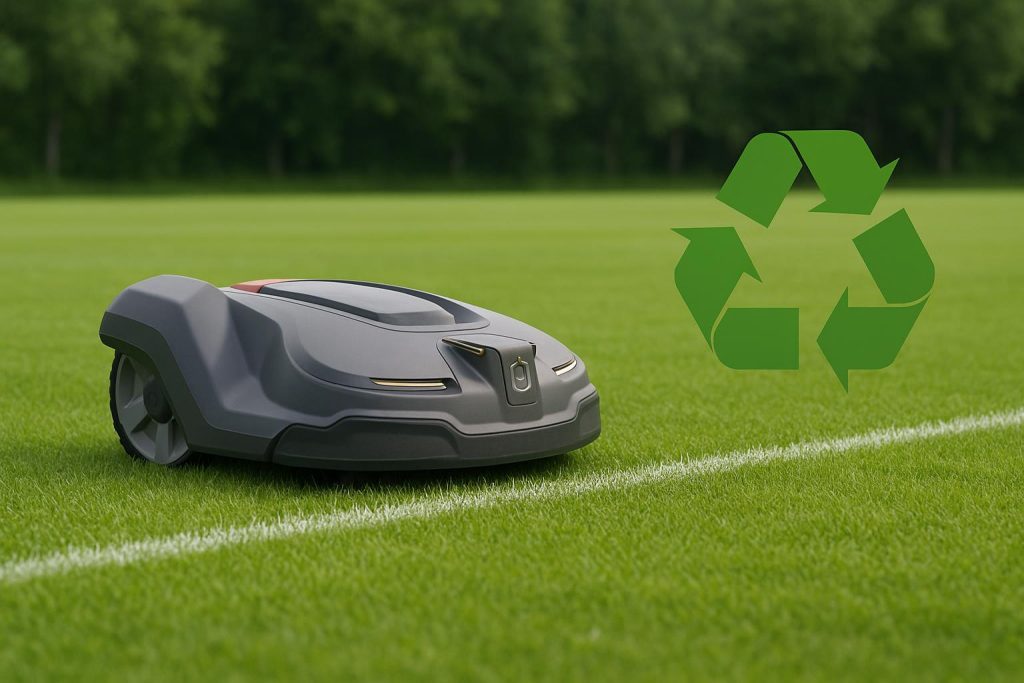
As sports clubs face increasing pressure to meet sustainability goals, one unexpected hero has emerged from the turf: the robotic mower. While most conversations about green technology in sport revolve around stadium lighting, transport, or waste management, grounds maintenance is quietly undergoing a transformation of its own—one that could significantly reduce a pitch’s carbon footprint.
Robotic mowers are not only redefining pitch care in terms of efficiency and precision, but also making a measurable difference to the environmental impact of sports facilities. Unlike traditional petrol-powered ride-on mowers, robotic alternatives are fully electric, operating on rechargeable lithium-ion batteries. This eliminates harmful fuel emissions and significantly lowers the overall energy consumption associated with maintaining natural grass.
Noise pollution is another overlooked benefit. Traditional mowers generate high decibel levels that can disrupt training sessions, local communities, and even wildlife. Robotic mowers, on the other hand, run almost silently. This makes them suitable for use during nighttime hours—allowing grounds teams to maximise daylight for other maintenance tasks while reducing noise during daytime operations.
Then there’s the issue of turf compaction. Heavy ride-on machinery can compact soil over time, damaging grass roots and impairing water absorption. Robotic mowers are lightweight and designed to move frequently but gently, which promotes healthier, more resilient turf without excessive wear. Healthier turf also requires less intervention—meaning less fertiliser, less irrigation, and fewer chemical treatments.
The principle of “mow little and often” is central to how robotic mowers operate. Frequent, light mowing encourages denser grass growth and strengthens the sward. This natural improvement in turf health often reduces the need for artificial inputs, helping sports facilities lower their reliance on chemical treatments. In other words, robotic mowers aren’t just reducing pollution—they’re supporting regenerative turf practices.
These benefits make a compelling case for clubs looking to align with environmental best practices and appeal to eco-conscious fans, sponsors, and governing bodies. It’s no longer just about aesthetics or performance; sustainability is now a key part of a pitch’s success story.
Leading suppliers and experts in grounds care—such as Ron Smith—have been instrumental in making these sustainable solutions more accessible to sports organisations at every level. With brands like Husqvarna offering advanced robotic systems like the Automower® and CEORA®, clubs now have the tools to upgrade both their turf care and their environmental credibility in one move. Ron Smith’s extensive experience ensures that sports clubs not only find the right robotic model for their needs, but also implement it in a way that delivers long-term, measurable benefits.
The shift toward robotic mowing is especially impactful for multi-use facilities and local sports clubs, where budgets and environmental targets often go hand in hand. The long-term savings on fuel, labour, and maintenance—combined with sustainability credentials—make robotic mowing a smart investment across the board.
It’s also worth noting the digital tools that come with modern robotic mowers. GPS-based boundary setting, fleet management apps, and remote diagnostics allow for more intelligent use of resources. Groundskeepers can monitor performance, update mowing schedules, and receive alerts—all without needing to be on-site. This precision helps avoid over-mowing, energy waste, and redundant effort.
As the world of sport continues to embrace its role in fighting climate change, every aspect of stadium and pitch management is being re-evaluated. Robotic mowing isn’t just a trend—it’s part of a bigger movement toward smarter, more responsible operations.
From reduced emissions and lower noise to healthier turf and less chemical dependency, robotic mowers are ticking all the right boxes for a greener future. And thanks to forward-thinking suppliers like Ron Smith, these innovations are no longer limited to elite clubs—they’re accessible, scalable, and ready to change the game from the ground up.
Sustainability in sport doesn’t have to come at the cost of performance. In fact, with the right technology in place, it can enhance it. And when it comes to turf care, the quiet hum of a robotic mower might just be the sound of progress.