


Most people think money is about numbers.
Income, returns, assets, performance. Clean, measurable, portable. You can move money across borders, across markets, across systems. It should behave the same way everywhere.
It doesn’t.
Where you live quietly reshapes how you think about money. It changes your sense of risk, your definition of security, and even what feels like “enough.” The numbers may stay the same, but the mindset shifts.
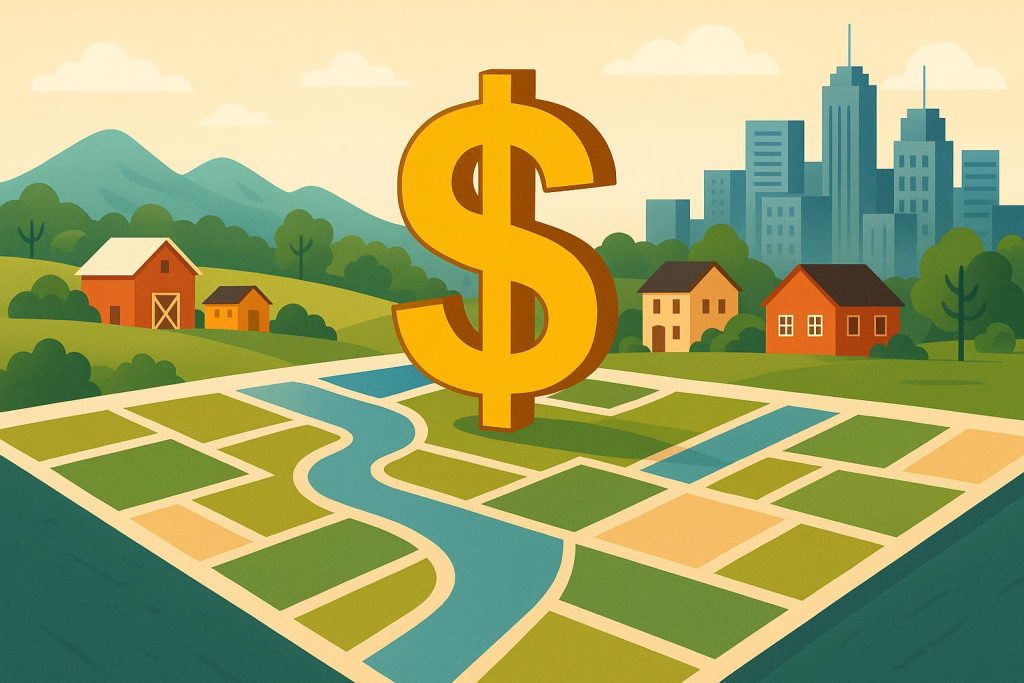
This is the geography of wealth.
The Same Wealth Feels Different in Different Places
Take the same amount of money and drop it into two different environments.
In one place, it feels like stability. In another, it feels like pressure.
Cost of living plays a role, but this goes deeper than expenses. It’s about context.
A report from UBS on global wealth found that perceptions of financial security vary widely by region, even among individuals with similar asset levels. In some cities, high net worth individuals still report feeling financially constrained, while in others, lower levels of wealth feel sufficient.
That difference isn’t about math. It’s about environment.
In dense financial hubs, everything moves faster. Expectations are higher. Benchmarks are visible. You compare constantly, even if you don’t mean to.
In quieter environments, the same wealth feels slower. More stable. Less exposed.
One client once said, “In one city, I feel like I’m behind. In another, I feel like I’m ahead. Nothing changed except where I was.”
Your Environment Sets the Baseline
Every place has a default.
What people spend on housing. What they consider normal for education. How they talk about investing. What success looks like in everyday life.
You absorb that baseline quickly.
Research in behavioral economics shows that people anchor their financial expectations to their immediate environment. This means your sense of what is “reasonable” spending or “acceptable” risk is heavily influenced by what you see around you.
Move to a city where everyone is investing aggressively, and caution starts to feel like hesitation. Move somewhere more conservative, and the same decisions feel bold.
The shift is subtle, but it’s constant.
Hong Wei Liao once described working with a family that relocated from a more conservative market to a major financial center. “Within a year, their entire approach to investing changed,” she said. “Not because their situation changed, but because their reference point did. They started asking different questions.”
Environment doesn’t just influence decisions. It changes the questions you think to ask.
Risk Is Local, Not Universal
We talk about risk as if it’s objective.
It isn’t.
Risk feels different depending on where you are.
In some regions, holding cash feels safe. In others, it feels like falling behind. In some markets, real estate is seen as stable. In others, it’s viewed as overexposed.
A global investor might understand all of this intellectually, but living in a place reinforces one perspective over the others.
I’ve seen families shift their entire portfolio approach after spending a few years in a different country. Not because they misunderstood the data, but because daily exposure changed how they interpreted it.
One individual put it simply: “When everyone around you is doing something, it stops feeling risky.”
That’s geography at work.
Time Horizons Shift With Location
Where you live also changes how you think about time.
In fast-moving cities, everything feels immediate. Decisions are made quickly. Opportunities are evaluated in short cycles. There is constant pressure to act.
In more stable environments, time stretches. Decisions can take longer. Long-term thinking becomes easier because the pace allows for it.
This affects how families plan.
A McKinsey study on global decision-making patterns found that environments with higher economic volatility tend to shorten planning horizons, whereas more stable regions encourage longer-term strategies.
That means your location is quietly shaping how far ahead you are willing to think.
It’s not just about discipline. It’s about context.
Mobility Compounds the Effect
For globally mobile families, this becomes more complex.
They don’t just adapt to one environment. They move between several.
Each location leaves an imprint.
A family might approach wealth one way while living in North America, then shift their mindset after spending time in Asia or Europe. Each system has its own rhythm, its own expectations, its own unspoken rules.
Over time, these influences layer on top of each other.
This can be an advantage. It creates perspective. It allows families to see multiple ways of thinking about wealth.
It can also create friction.
Different family members may internalize different environments. One prioritizes growth. Another prioritizes preservation. Both are responding to the contexts they’ve experienced.
Without realizing it, they are operating from different financial cultures.
Identity and Money Become Linked
Where you live doesn’t just affect how you manage money. It affects how you relate to it.
In some places, wealth is visible and openly discussed. In others, it is private and understated.
This shapes behavior.
In environments where wealth is visible, there is more pressure to signal success. Spending patterns reflect that. Decisions are influenced by how they appear externally.
In more private cultures, the same level of wealth may lead to more conservative behavior. Less emphasis on display, more focus on long-term stability.
Neither approach is right or wrong. They are responses to environment.
The challenge comes when people move between these systems without adjusting consciously.
One person described feeling like they had “two financial personalities” depending on where they were. In one country, they spent freely. In another, they became highly conservative.
That inconsistency creates confusion over time.
What Families Often Miss
Most families focus on strategy.
Asset allocation. Tax efficiency. Structure.
All of that matters.
But strategy operates inside a context.
If you don’t account for how your environment is shaping your behavior, your strategy will drift. Not because it’s wrong, but because your mindset keeps shifting.
You might think you are making objective decisions. In reality, you are responding to where you are.
Building Awareness Into the System
The solution is not to ignore geography. It’s to recognize it.
Step Back and Compare Perspectives
If you operate across multiple regions, take time to compare how each environment influences your thinking.
What feels risky in one place might feel normal in another. That contrast is useful.
Define Your Own Baseline
Instead of relying on local norms, define what “enough” and “appropriate” mean for your family.
Write it down. Revisit it.
This creates a stable reference point, regardless of where you are.
Separate Environment From Decision
Before making a major decision, ask a simple question.
Would this choice feel the same if I were in a different place?
If the answer is no, environment is influencing the outcome.
That doesn’t make the decision wrong, but it makes the influence visible.
Use Geography as an Advantage
Exposure to multiple environments can improve decision-making.
You are not limited to one way of thinking.
Use that.
Evaluate opportunities from different perspectives. Combine insights rather than defaulting to the dominant local mindset.
The Bigger Shift
Money moves easily.
Mindset does not.
Where you live shapes how you think, what you value, and how you act. Those influences are constant, even when they are not obvious.
Understanding the geography of wealth changes how you approach everything else.
It reminds you that financial decisions are not just about numbers.
They are about context, perception, and the environment you operate in every day.