


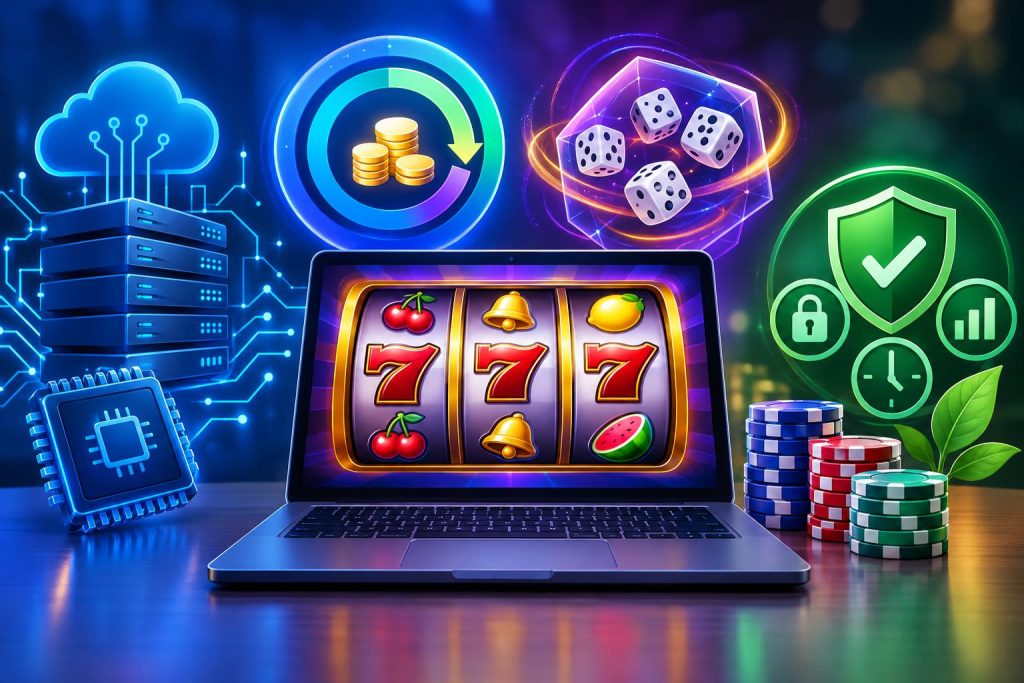
Online gaming has evolved into a diverse entertainment industry, combining advanced technology, interactive design, and sophisticated mathematical systems. Among the many categories available, online slot games attract attention because of their recognizable mechanics, colorful graphics, and accessible interfaces. However, understanding these games requires more than recognizing symbols or pressing a spin button. Learning about random number generators, return-to-player percentages, volatility, and platform security provides valuable insight into how modern slot games actually operate.
What Are Online Slot Games and How Do They Work?
Online slot games are digital versions of traditional reel-based gaming machines. They typically feature multiple reels containing symbols that form combinations according to predefined rules.
Modern slot games may include animated themes, interactive bonus rounds, expanding symbols, and additional gameplay features. Although their visual designs differ, their fundamental mechanics generally depend on mathematical probability.
When a player initiates a spin, the software determines an outcome and displays the corresponding symbols. The game’s paytable explains which combinations qualify for payouts and how those payouts are calculated.
Understanding these mechanics helps distinguish entertainment features from the underlying probability system.
The Importance of Random Number Generator Technology
A Random Number Generator, commonly abbreviated as RNG, is a fundamental component of many online slot games.
This technology produces unpredictable numerical values that determine game outcomes. In properly implemented independent-spin games, previous results do not influence subsequent spins.
Can Players Predict Winning Combinations?
A common misconception suggests that certain sequences, playing times, or previous outcomes can predict future results.
Some online discussions use the expression slot gacor to describe games perceived as producing frequent winning combinations. However, this informal term does not represent a scientifically established gaming classification.
In independently randomized games, a series of losses does not guarantee an upcoming win. Similarly, several successful spins do not indicate that the next result will follow the same pattern.
Understanding randomness is essential for developing realistic expectations.
Understanding RTP and Slot Game Volatility
Return to Player, or RTP, describes the theoretical percentage of total wagers that a game is designed to return over an extended period.
For example, a game with a theoretical RTP of 96% is designed to return approximately $96 for every $100 wagered across a sufficiently large volume of gameplay.
This calculation does not mean an individual player will receive $96 after wagering $100. Actual short-term results can differ substantially from the theoretical average.
What Is Volatility in Online Slots?
Volatility describes how game payouts are distributed.
Low-volatility games generally feature smaller, more frequent payouts, while high-volatility games tend to produce less frequent but potentially larger payouts.
Two games may share identical RTP percentages while offering significantly different experiences because of their volatility structures.
Neither RTP nor volatility can reliably predict the outcome of an individual gaming session.
Essential Features of Modern Online Gaming Platforms
Modern gaming platforms increasingly prioritize accessibility, performance, and user protection.
Responsive interfaces allow games to adapt to smartphones, tablets, and desktop computers. HTML5 technology also enables browser-based entertainment without requiring additional applications.
Security remains equally important. Reputable regulated platforms should provide encrypted connections, clear terms of service, transparent payment policies, and accessible information about game rules.
Independent testing and applicable regulatory oversight can provide additional assurance that game software operates according to documented technical standards.
Responsible Gaming and Digital Awareness
Responsible gaming involves understanding financial risks, establishing personal limits, and treating games of chance as entertainment rather than reliable income opportunities.
Players should avoid chasing losses, borrowing money to gamble, or interpreting random outcomes as guaranteed patterns.
Checking local regulations and age restrictions is equally important before accessing real-money gaming services.
The Future of Online Slot Entertainment
Artificial intelligence, cloud computing, and improved graphics technologies may continue transforming online entertainment.
Developers are exploring more responsive interfaces, immersive visual effects, and personalized accessibility features.
Nevertheless, technological innovation should remain balanced with transparency, fairness, and consumer protection.
Ultimately, understanding RNG systems, RTP calculations, volatility, and responsible gaming principles allows users to evaluate online slot games more critically. Accurate information and informed decisions remain more valuable than promotional claims or unsupported predictions.