


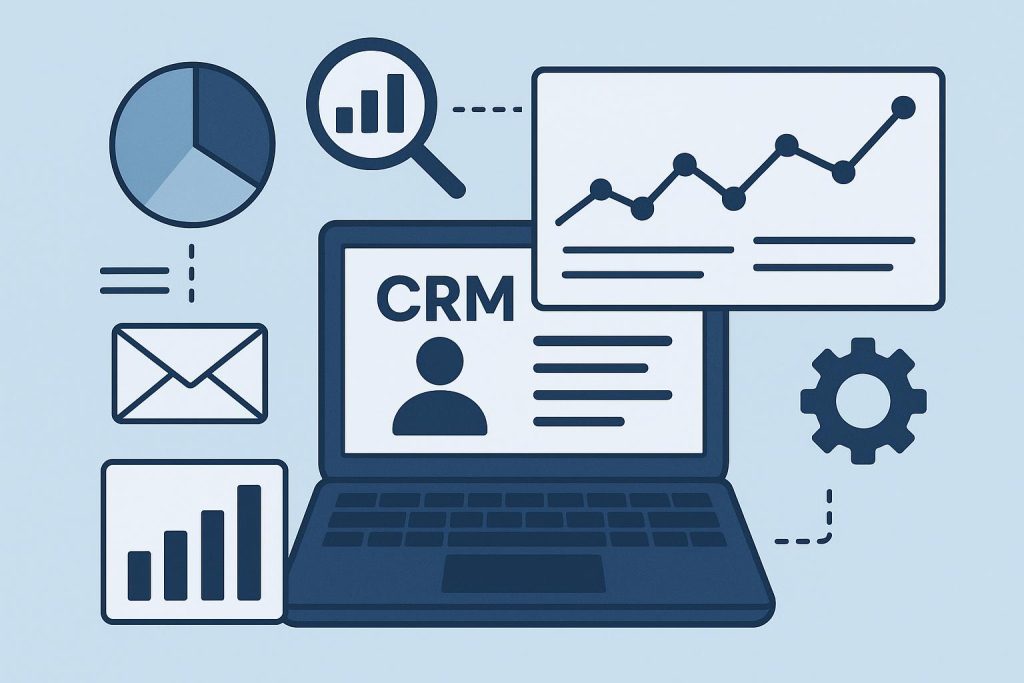
B2B sales teams have access to more data than ever. They can review CRM records, buyer intent signals, firmographic data, website activity, technology usage, funding events, hiring trends, and engagement history. In theory, this should make selling easier.
In practice, it often creates more complexity.
The problem is not a lack of information. The problem is that many teams do not have a clear way to turn that information into better sales decisions. This is where B2B sales intelligence software becomes valuable.
The best tools do not simply collect data. They help sellers, managers, marketers, and RevOps teams understand which accounts matter, why they matter, and what to do next.
The Problem With Too Much Sales Data
Most revenue teams are not short on data. They are short on clarity.
A typical sales rep may need to check multiple sources before reaching out to an account. They might look at the CRM, company website, LinkedIn, intent data, previous emails, call notes, funding news, and marketing engagement. This research can be useful, but it also takes time.
The result is often inconsistent execution. Experienced reps may know how to connect the dots, while newer reps may miss important signals. Some reps may focus on accounts that look interesting but are not commercially strong. Others may ignore accounts with real potential because the signals are buried in different systems.
Common issues include:
- Too many disconnected tools
- Inconsistent account research across reps
- Poor visibility into why an account is worth pursuing
- Manual prioritization based on rep judgment alone
- Marketing and sales working from different definitions of a good account
- RevOps struggling to standardize scoring and routing logic
B2B sales intelligence software should solve these problems by turning scattered information into practical guidance.
What Sales Intelligence Should Actually Provide
A strong sales intelligence platform should help teams answer specific revenue questions.
| Question | Why It Matters |
|---|---|
| Is this account a good fit? | Helps reps avoid wasting time on low-quality prospects |
| Why is this account relevant now? | Supports timely and contextual outreach |
| What signals suggest buying potential? | Helps sellers understand urgency and need |
| How similar is this account to past customers? | Connects prospecting to real conversion patterns |
| What should the rep do next? | Turns intelligence into action, not just reporting |
The most useful sales intelligence does not stop at showing company information. It helps prioritize action.
This is important because sales teams are measured on outcomes, not research volume. A rep does not win because they found more data. They win because they used the right information to start the right conversations with the right accounts.
Why Account Prioritization Is the Core Use Case
One of the most important functions of B2B sales intelligence software is account prioritization.
Not every account deserves the same amount of attention. Some companies are a strong match based on industry, size, growth stage, technology stack, or historical win patterns. Others may look relevant at first but have a low probability of converting.
Without prioritization, sales teams often rely on activity volume. Reps send more emails, make more calls, and work larger lists. But more activity does not always mean better pipeline.
A smarter model focuses on account quality first.
Using b2b sales intelligence software can help revenue teams identify which accounts are more likely to convert and why they deserve attention. This allows sellers to focus their time on accounts with stronger commercial potential instead of spreading effort too evenly across weak and strong prospects.
How Sales Intelligence Supports Different Revenue Teams
B2B sales intelligence is not only useful for individual sellers. It can support the entire go-to-market organization.
| Team | How Sales Intelligence Helps |
|---|---|
| Sales reps | Prioritize accounts, reduce manual research, and personalize outreach |
| Sales managers | Coach reps around higher-quality opportunities |
| Marketing | Build campaigns around accounts sales is more likely to pursue |
| RevOps | Improve segmentation, routing, territory planning, and reporting |
| Leadership | Understand where revenue opportunity is strongest |
When each team uses the same account intelligence, the business becomes more aligned. Sales no longer works from one version of the market while marketing works from another. RevOps can build better systems because account quality is defined more clearly.
Better Intelligence Creates Better Personalization
Personalization is often misunderstood in sales. It does not mean adding a prospect’s name, company, or recent LinkedIn post into a generic email. Good personalization is based on relevance.
If a seller understands why an account may have a problem, why the timing may be right, and how similar companies have solved that problem, they can create a more useful message.
Sales intelligence helps by giving reps context such as:
- What the company may be trying to achieve
- What operational challenges may exist
- Which buying triggers may be present
- Which internal stakeholders may care
- What similar customers have needed before
This makes outreach more specific and less generic.
Why Sales Intelligence Improves Pipeline Quality
A strong pipeline is not just a large pipeline. It is a pipeline filled with accounts that have a realistic chance of converting.
B2B sales intelligence improves pipeline quality by helping teams filter out weak-fit accounts earlier. This allows reps to spend more time developing better opportunities and less time chasing accounts that were unlikely to close.
It also gives managers a better view of risk. If the pipeline is full of accounts with poor fit, leadership can act earlier instead of discovering the issue at the end of the quarter.
Final Takeaway
B2B sales intelligence software should do more than provide data. It should help teams make better decisions.
The best platforms help revenue teams prioritize accounts, understand buying context, improve personalization, align sales and marketing, and build stronger pipeline. In a market where sales efficiency matters more than ever, better intelligence is not just helpful. It is becoming essential.