


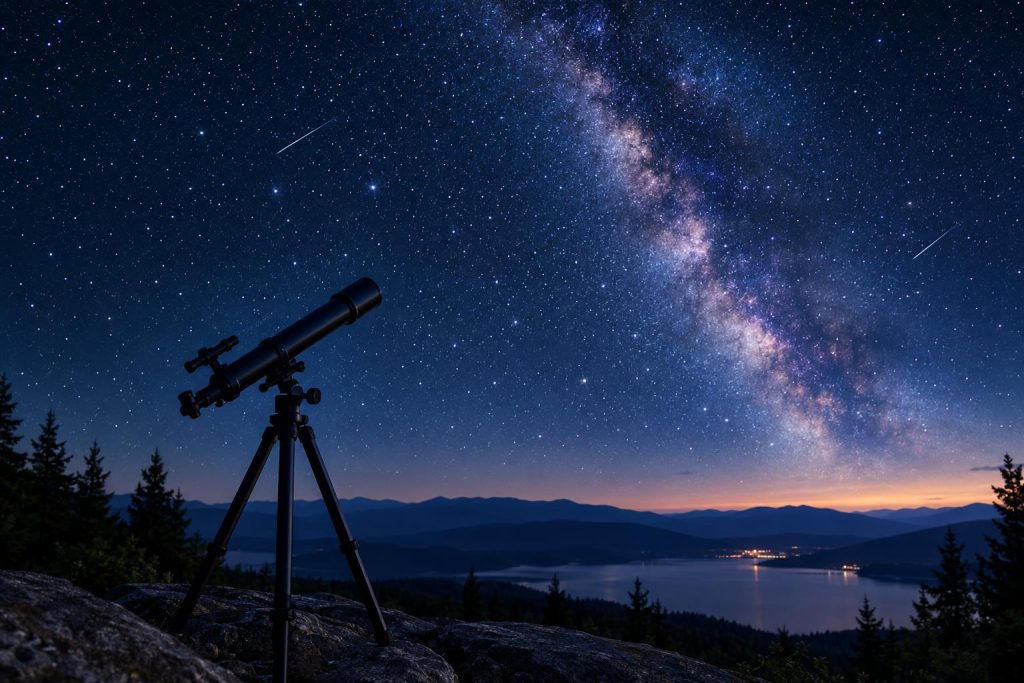
Stargazing is when you look up at the clear night sky for any celestial objects out there, such as stars, planets, galaxies, comets, asteroids, and countless more. Want to learn the basics of skywatching? Below is a simple and short guide on how to stargaze like an astronomer in your Solano Grand home below!
Bring stargazing equipment
To go stargazing, you must have the necessary tools and equipment in order to skywatch properly. You must have:
- Binoculars/Telescope
- Flashlights
- Compasses
- Notebook
- Sky map
Ideal stargazing conditions
Ideal stargazing spots are spaces that are far from artificial light (which causes light pollution). They must be away from blocking views, such as clouds or even the moon’s light in the night sky’s horizon. Examples of great skygazing locations are deserts, mountains, moorlands, and other remote places because of their extreme isolation, clear conditions, and little to no light pollution.
Spotting Cosmic Objects
While stargazing, you may notice many different kinds of lights that shine at night. The stars twinkle brightly, while planets remain stationary. Shooting “stars” move swiftly and leave a small trail, airplanes blink their lights at fixed intervals, and satellites have multiple lights and move swiftly yet steadily across the night sky. There could be millions more waiting to be viewed in the night sky above!
Join a stargazing tour
A professional tour guide can provide valuable information and important equipment for a stargazing trip. They are expertly trained to spot celestial objects such as constellations and other deep-sky phenomena that you may have missed otherwise.
Basic night sky etiquette
To respect other stargazers and prevent further light pollution, use only red-colored torches or flashlights to help conserve the night sky for future generations. Never point and shine at other individuals with flashlights or phone screen lights because even a tiny amount of absorbed light could take about 20 minutes to adjust to the complete darkness of a clear, dark night.