


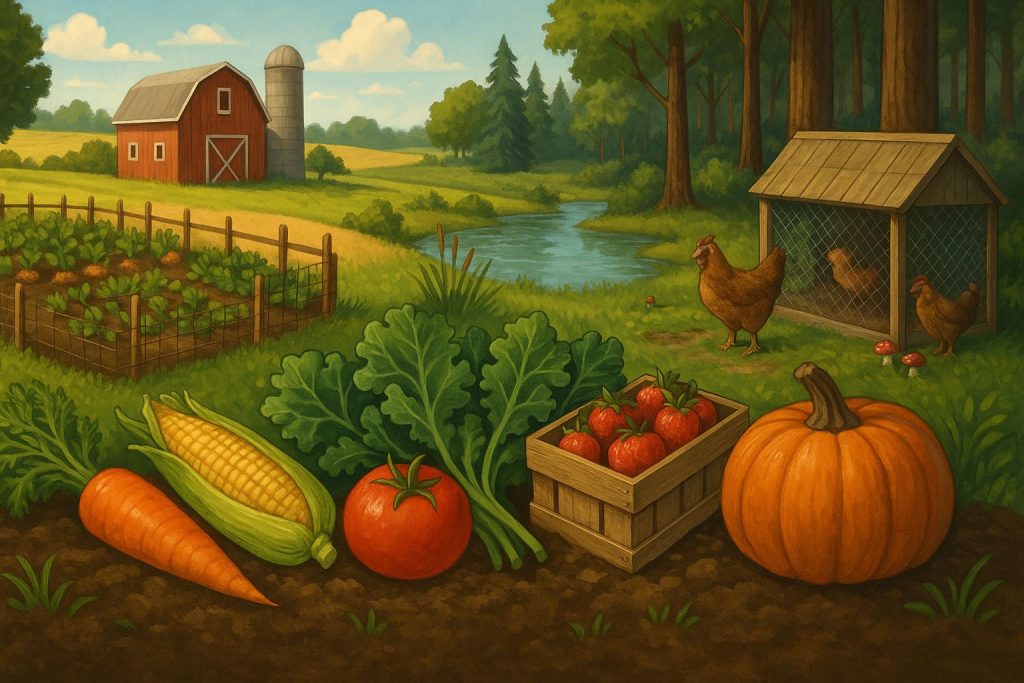
A child can name five cereal brands before they can explain where oats grow. They know strawberries come in plastic punnets, milk comes in a bottle, and carrots appear in a bag with the muddy bits washed away. The weekly food shop is convenient, but it can make food look as if it begins on a shelf.
Helping children understand where food comes from does not mean turning every meal into a lesson. It means giving them enough context to see food as something grown, reared, caught, baked, picked, packed, cooked and shared.
Food Makes More Sense When Children See the Start
The supermarket is the final stop, not the whole story. A potato has been planted, watered and lifted from soil long before it becomes mash. Bread starts with grain, not toast. Eggs come from hens, not the chilled aisle.
Children understand this best when they can touch, smell and notice things. Pulling a carrot from a garden bed, cracking an egg into a bowl or seeing fish on a market stall gives them details that packaging cannot. Even a windowsill pot of basil can start a conversation about roots, leaves and why herbs wilt when they are forgotten.
Schools and families do not need acres of land. Even planting a few easy crops with children, from herbs to potatoes in containers, can make vegetables feel less mysterious.
It Helps Children Respect Work, Waste and Seasonality
Food knowledge can change the way children look at waste. If they have watched tomatoes ripen slowly, or waited weeks for cress to grow on damp kitchen roll, throwing food away starts to feel different. They begin to understand that food takes time, water, weather, soil, energy and people.
Seasonality matters too. A child who has only seen berries in January may assume every food is available all year because shops can make it happen. Talking about why British apples are common in autumn, why asparagus has a short season, or why some foods travel a long way helps children connect meals to weather and place.
Food Conversations Build Confidence at Home
Children often try new food more readily when they understand it. A courgette sliced into pasta sauce may be refused, but a courgette they helped pick, wash or grate has a story attached to it. They may still dislike it, and that is fine, but curiosity has a better chance when food is not just presented as a surprise on a plate.
Food routines can also help children feel included. Choosing apples at a farm shop, stirring pancake batter, packing a picnic or helping plan a jacket potato lunch all give children small jobs they can manage. For adults thinking seriously about becoming a foster parent, learning favourite meals and making room for familiar foods can become part of helping a child feel noticed.
It Makes Healthy Eating Less Abstract
Children are often told to eat fruit, vegetables, fibre and protein, but those words can float over their heads. Seeing whole foods before they are chopped, cooked or processed makes healthy eating easier to picture. Peas in a pod, oats in flapjacks, lentils in soup and yoghurt with fruit all show how ingredients turn into meals.
A balanced diet is easier to discuss when children can see variety on the plate rather than hear rules about “good” and “bad” food. Adults may find how different food groups fit together useful in the background, but children usually need plain examples: pasta gives energy, beans help fill you up, and fruit adds colour and fibre.
Start Small, Not Perfect
Families are busy, and not everyone has a garden, spare money for farm visits or time for slow cooking every day. Children can still learn plenty from normal routines if adults make the food story visible.
Try one or two small habits:
- choose one seasonal fruit or vegetable
- grow herbs, cress or potatoes in a tub
- compare a raw ingredient with the cooked meal
- visit a market, community garden or pick-your-own farm
The point is not to create little food experts. It is to help children ask better questions, waste less, try more, and understand that meals do not appear by magic. Once they see the journey behind everyday food, the supermarket becomes part of the story rather than the whole story.