


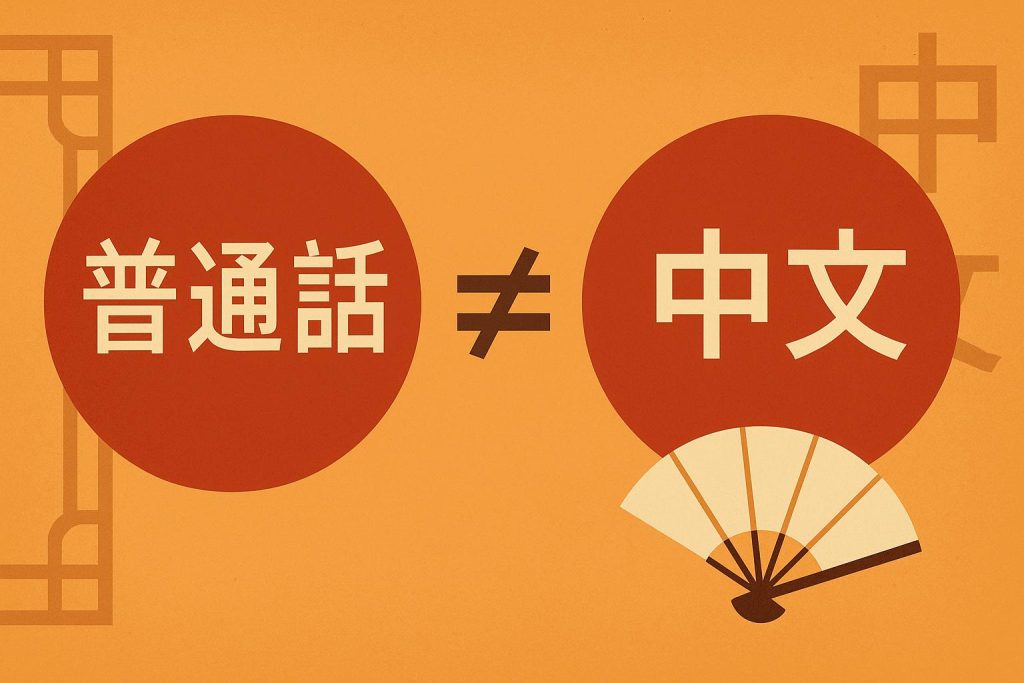
If you start to learn Mandarin online or with an online Chinese teacher, one of the first surprising discoveries is that Mandarin — despite being the official national language of China — is not the mother tongue of a substantial portion of the country’s population! China is one of the most diverse nations in the world. Although Mandarin presents a unified written system and a single official spoken standard, the spoken language landscape beneath that official laye has dozens of mutually unintelligible dialect groups.
The conventional Western framing of Chinese as a single language is therefore misleading in an important respect. What linguists classify as the Chinese language family, that is, Sinitic languages, encompasses seven major dialect groups, within each of which there is further substantial variation. Two speakers of nominally the same dialect from villages separated by a mountain range may find each other difficult or impossible to understand. This degree of variation is a direct product of China’s geography and history: a vast territory and significant natural barriers between regions. Of these dialect groups, Cantonese is the most internationally visible, largely because the majority of Chinese emigrants to Europe, North America, and Australia prior to the late 20th century came from Guangdong province, where Cantonese is the dominant spoken language. Cantonese has nine tones compared to Mandarin’s four! There also is a substantially different vocabulary system to it, and what’s interesting is that it shows a phonological system that preserves features of Middle Chinese that Mandarin has lost.
Shanghainese, the most prominent Wu dialect, is entirely unintelligible to Mandarin speakers. Similarly, the Min dialect group — which includes Hokkien, Teochew, and Fujianese variants — is spoken by communities across Fujian province and across a wide diaspora in Southeast Asia.
The promotion of Putonghua, i.e. standard Mandarin, as the national language has been a sustained policy priority of the Chinese government since 1949, pursued through the education system, state media, and more recently through digital platforms. As a result, Mandarin proficiency has increased dramatically across all age groups and regions over the past several decades, particularly among younger urban populations. Some teaching institutions like GoEast Mandarin in Shanghai may also offer online programs that adress learners who would like to understand more about Chinese dialects.