
Most Etsy keyword research fails for one reason: sellers treat it as a single event instead of an operating system. They brainstorm twenty keywords, paste them into a tool, and call it done, then wonder why their listings are stuck on page seven.
The data tells a different story. A long-tail keyword with 200 monthly searches and high purchase intent will out-convert a generic 20,000-search term almost every time. Etsy’s algorithm also works in two stages—query matching first, then ranking—so keyword research only gets you through the door. You need a system to keep you there.
This guide walks through a practical keyword research process, from finding keyword ideas to evaluating and applying them, so you can make informed SEO decisions with confidence.
What Makes a Good Etsy Keyword?
A good Etsy keyword isn’t simply the one with the highest search volume. The best keywords strike a balance between search demand, competition, buyer intent, and relevance. Ideally, you should target terms that shoppers actively search for, accurately describe your product, and aren’t dominated by highly competitive listings.
As a general rule, prioritize keywords that are specific rather than broad. For example, a phrase like “personalized leather journal” is more likely to attract ready-to-buy customers than a generic term like “journal.” Keyword research tools such as EHunt can help you compare keyword popularity, competition, and related search terms, making it easier to choose keywords with the best potential.
Generate Keyword Ideas
The first step of keyword research is building a list of potential keywords. Instead of guessing what shoppers might search for, start with real Etsy search data and analyze what successful sellers are already using.
Use Etsy Search Suggestions
Etsy’s search suggestions are one of the easiest ways to discover keyword ideas. When you type a seed keyword into Etsy’s search bar, the autocomplete suggestions reveal phrases that shoppers frequently search for.
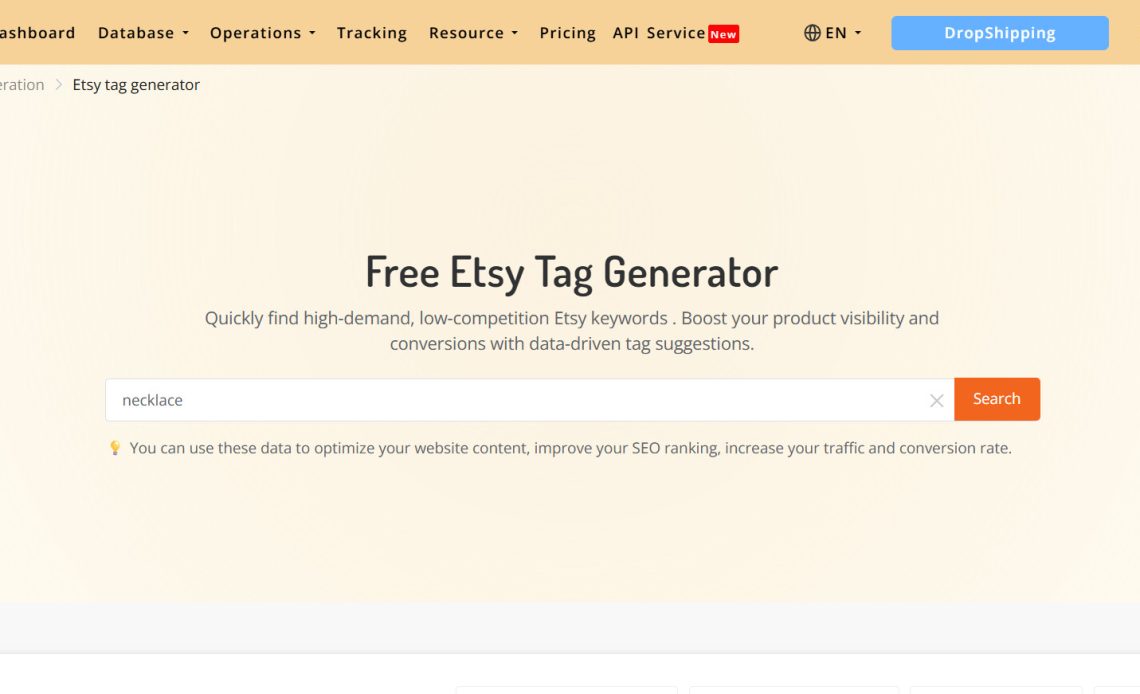
However, manually collecting keywords can be time-consuming. Tools like EHunt Tag Generator can help speed up this process by generating a list of related Etsy keywords from a seed keyword. Since the suggestions are based on existing Etsy search terms, sellers can quickly expand their keyword ideas and discover more relevant long-tail opportunities.
Analyze Top-Ranking Competitors
Your competitors can provide valuable keyword insights, especially listings that already rank well and generate sales. Analyze their titles, categories, attributes, and product positioning to identify recurring keyword patterns.
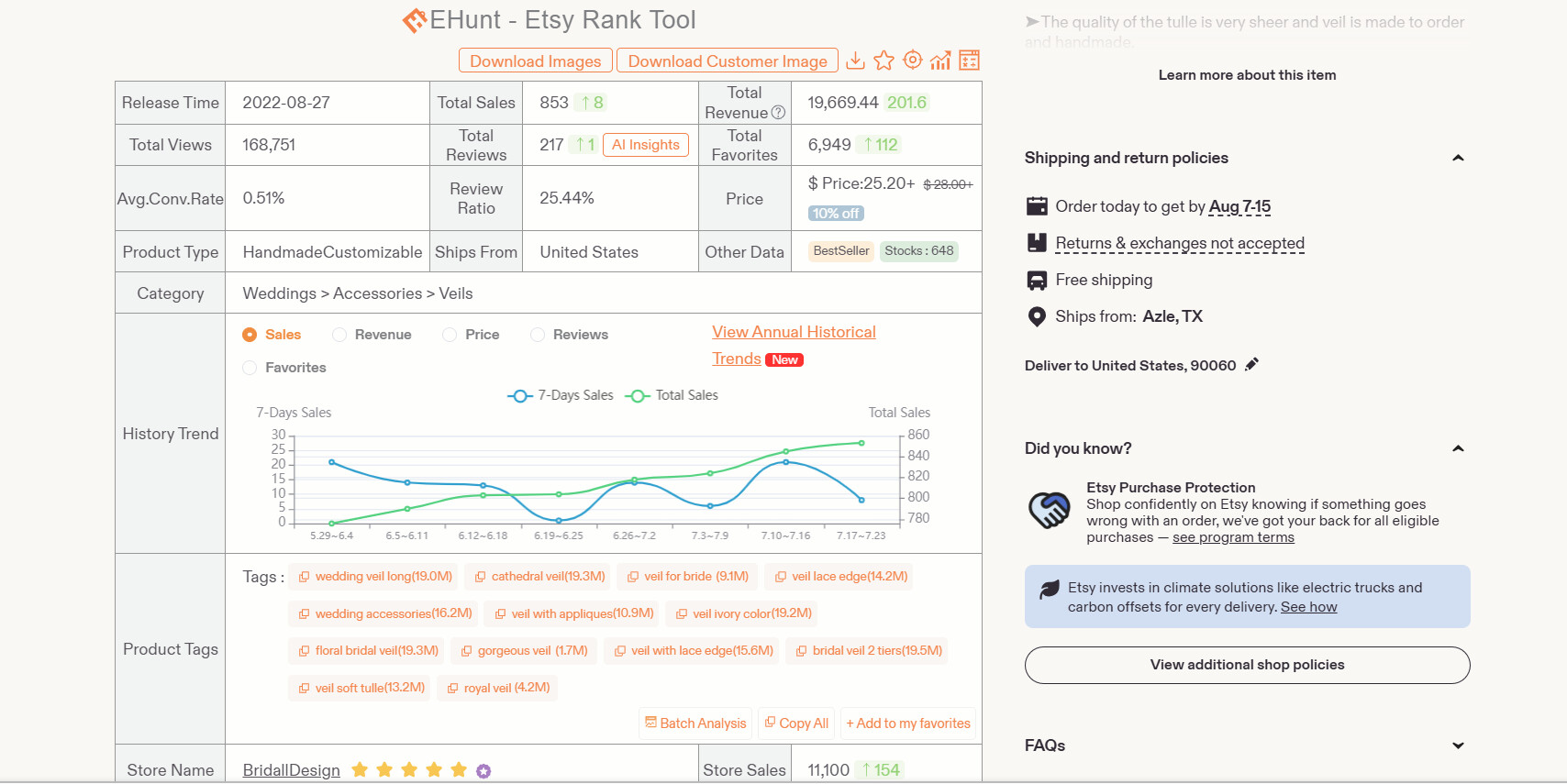
One challenge is that Etsy does not publicly display listing tags, making competitor research more difficult. EHunt Etsy Rank Extension solves this problem by allowing sellers to view the hidden tags of competitor listings directly while browsing Etsy. This helps you uncover additional keywords your competitors are targeting and find new opportunities for your own listings.
Validate and Prioritize Your Keywords
Once you’ve built a keyword list, the next step is deciding which keywords are worth targeting. Rather than choosing keywords based on search volume alone, evaluate each one based on demand, competition, buyer intent, and market performance.
Prioritize Long-Tail Keywords
Long-tail keywords are more specific and usually indicate stronger buyer intent. For example, “custom pet portrait necklace” is more targeted than the broad keyword “necklace.”
Although long-tail keywords typically receive fewer searches, they often face lower competition and are easier to rank for. A balanced keyword strategy includes one primary keyword supported by several relevant long-tail keywords.
Validate with Market Data
Before optimizing your listing, compare each keyword across several key metrics instead of relying on a single number.
| Metric | What to Look For | Recommendation |
| Search Demand | Is there consistent buyer interest? | Prioritize keywords with medium to high search demand. |
| Competition | How difficult is it to rank? | Medium or low competition is generally easier for new and growing shops. |
| Sales | Are top-ranking listings generating orders? | Choose keywords backed by proven sales, not just traffic. |
| Favorites | Are shoppers saving these products? | A high number of favorites usually indicates strong buyer interest. |
| Trend | Is demand stable over time? | Prefer keywords with stable or growing trends over declining ones. |
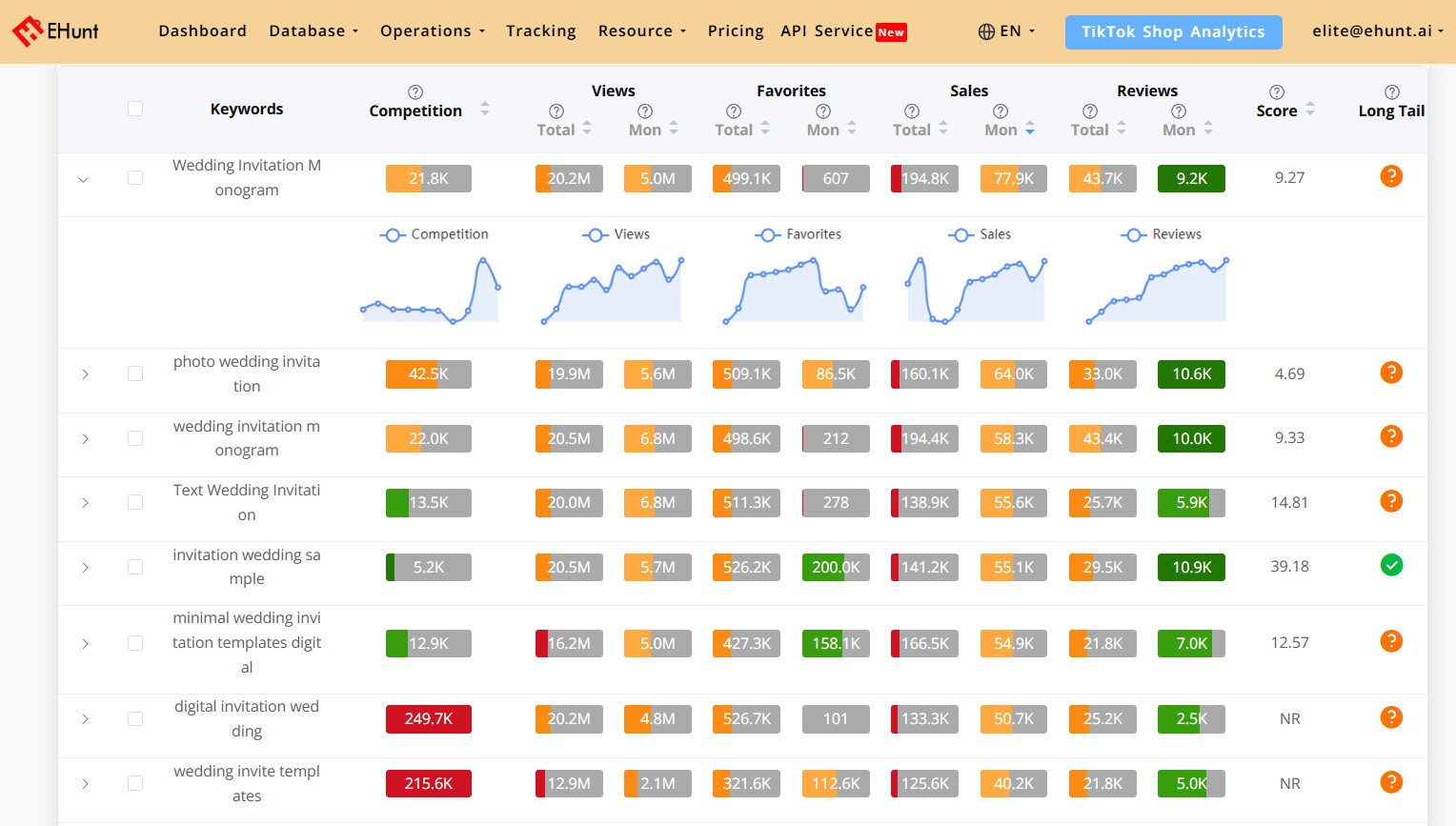
One challenge is that Etsy doesn’t publicly provide most of these metrics, making it difficult to evaluate keywords objectively. EHunt Etsy Keyword Tool helps solve this by analyzing keyword demand, competition, sales, favorites, and long-term trends in one place. It can also identify whether a keyword is a long-tail keyword, helping sellers compare opportunities more efficiently before optimizing their listings.
Categorize Your Keywords
After selecting your target keywords, organize them by purpose before adding them to your listing.
| Keyword Type | Example | Primary Use |
| Primary Keyword | personalized leather journal | Main topic of the listing; use in the title. |
| Secondary Keywords | custom journal, engraved notebook | Expand keyword coverage in tags and descriptions. |
| Long-Tail Keywords | personalized leather travel journal | Target more specific searches with lower competition. |
| Related Keywords | gift for writers, writing notebook | Add context and capture additional search variations. |
Organizing keywords before optimization helps you build a natural, well-structured listing instead of repeating the same keyword across every field.
Apply Your Keywords Across Your Etsy Listing
After categorizing your keywords, the final step is placing them throughout your listing. The goal isn’t to repeat the same keyword everywhere, but to give Etsy multiple signals about what your product is while keeping your copy natural and readable.
| Listing Element | Recommended Keyword | Best Practice |
| Title | Primary keyword | Place it naturally near the beginning of the title. |
| Tags | Secondary & long-tail keywords | Cover different search variations instead of repeating the same phrase. |
| Description | Primary + related keywords | Reinforce your main topic while writing for shoppers. |
| Categories | Relevant product category | Choose the most accurate category to improve relevance. |
| Attributes | Product details (color, material, size, etc.) | Complete all applicable attributes to match more searches. |
Every element of your listing contributes to Etsy’s understanding of your product. Instead of keyword stuffing, use each field to reinforce your topic from a different angle, creating a listing that’s optimized for both search engines and shoppers.
Build an Etsy Keyword Research Workflow
Keyword research is most effective when you follow a consistent process. Instead of jumping between tools or randomly choosing keywords, use the workflow below for every new product you list.
- Brainstorm Seed Keywords: Start with a few broad keywords that describe your product, its purpose, or its target audience.
- Expand Your Keyword List: Use Etsy Search Suggestions and competitor research to discover additional keyword ideas, especially long-tail keywords and related search terms.
- Validate Your Keywords: Compare search demand, competition, sales performance, and trends to identify keywords with the best ranking potential.
- Categorize Your Keywords: Group your keywords into primary, secondary, long-tail, and related keywords to make listing optimization more organized.
- Optimize Your Listing: Place each keyword where it fits naturally, including your title, tags, description, categories, and attributes.
- Monitor and Refine: Track your listing’s performance and review your keyword strategy regularly. As search trends and competition change, update your keywords to maintain visibility.
By following the same workflow for every listing, you’ll build a more consistent SEO strategy and make keyword decisions based on data rather than guesswork.
Keep Your Keyword Strategy Up to Date
Etsy keyword research isn’t a one-time task. Search trends, buyer preferences, and competition change over time, so the keywords that perform well today may not be as effective a few months later.
Review your keyword strategy every 30–60 days, or whenever you launch a new product, enter a seasonal niche, or notice a drop in traffic or sales. Refresh your keyword list, monitor emerging trends, and revisit competitor listings to keep your SEO strategy aligned with current buyer demand.
Common Etsy Keyword Research Mistakes to Avoid
Even with the right tools, keyword research can be ineffective if you make common mistakes. Avoid these pitfalls to improve your chances of ranking and converting.
- Targeting only high-volume keywords. Popular keywords often come with intense competition. Balance them with long-tail keywords that are easier to rank for.
- Ignoring buyer intent. Choose keywords that reflect what shoppers are ready to buy, not just what they browse.
- Using the same keyword everywhere. Instead of repeating one keyword across your title, tags, and description, use a mix of primary, secondary, and related keywords to help Etsy better understand your listing.
- Copying competitors exactly. Learn from successful listings, but build a keyword strategy that fits your own products.
- Skipping keyword validation. Don’t rely on assumptions. Always evaluate demand, competition, and market performance before targeting a keyword.
- Never updating your keywords. Etsy search trends evolve, so regularly review and refine your keyword strategy to stay competitive.
FAQs
How do you perform keyword research?
- Brainstorm seed keywords based on your product, niche, and target audience.
- Expand your keyword list using Etsy Search Suggestions and competitor analysis.
- Validate each keyword by evaluating its search demand, competition, buyer intent, sales, and trends.
- Categorize your keywords into primary, secondary, long-tail, and related keywords.
- Optimize your listing by placing keywords naturally in your title, tags, description, categories, and attributes.
- Review and update regularly to keep up with changing search trends and market demand.
How to find low competition keywords for Etsy?
Finding low-competition keywords on Etsy requires looking beyond search volume alone. Focus on specific long-tail keywords that match your product and have clear buyer intent. Since Etsy does not publicly show keyword competition data, EHunt Etsy Keyword Tool can help by directly showing whether a keyword has high or low competition, along with other market insights. This allows sellers to quickly identify keywords with better ranking opportunities.
What is the best free Etsy keyword research tool?
For sellers looking for a free Etsy keyword research tool, EHunt is a strong option. It helps sellers discover relevant Etsy keywords, analyze search demand, competition levels, sales performance, and trends. By providing data-driven insights instead of relying on guesswork, EHunt makes it easier to find keyword opportunities and optimize Etsy listings more effectively.
How many keywords should I use in an Etsy listing
Etsy gives you 140 characters for your title and 13 tags to work with. Use them strategically: place your primary keyword near the beginning of your title, add 3–5 relevant secondary keywords, and include specific long-tail or buyer-intent phrases in your tags. Avoid unnecessary repetition and focus on diverse, relevant keyword phrases to reach more search opportunities.
Conclusion
Effective Etsy keyword research is about more than finding popular search terms—it’s about understanding what buyers are looking for, evaluating market opportunities, and applying the right keywords strategically throughout your listings. By following a structured workflow and refining your keyword strategy over time, you can improve your shop’s visibility and attract more qualified traffic.
While manual research is a great starting point, the process becomes much more efficient with the right tools. EHunt helps Etsy sellers streamline keyword research by discovering relevant keyword ideas, analyzing search demand, competition, sales, and trends, as well as uncovering competitor tags and long-tail opportunities. Whether you’re launching your first product or scaling an established shop, EHunt can help you make faster, more data-driven SEO decisions with confidence.