
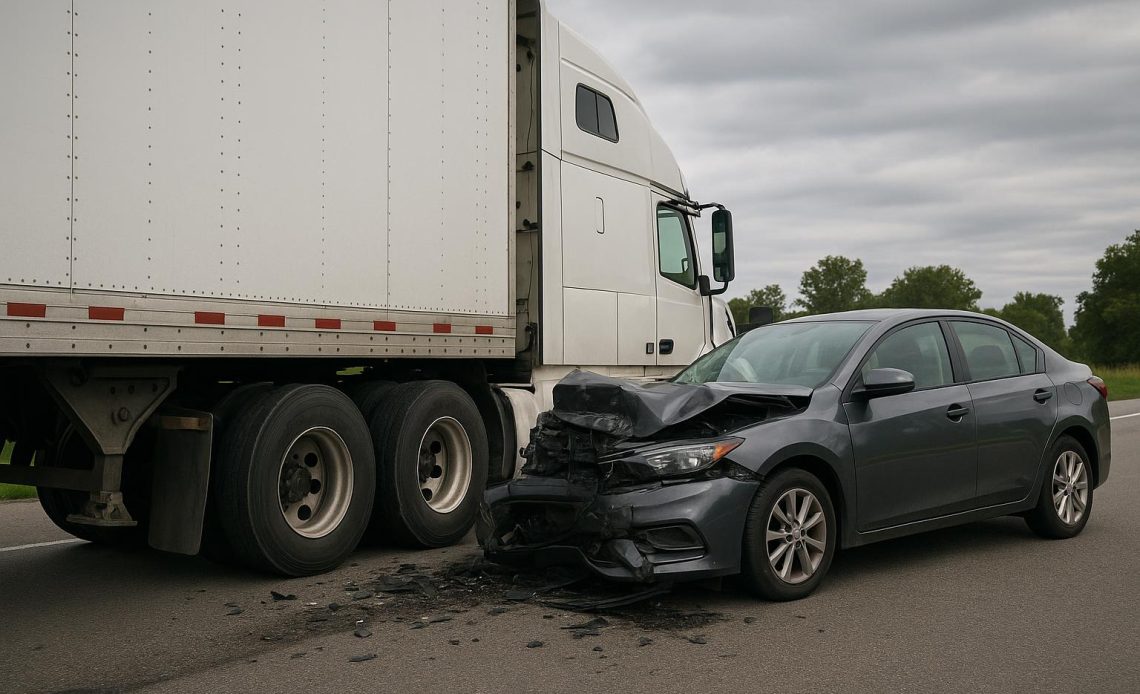
You survived the crash, but the dust has hardly settled before the reality of your situation sets in. Between managing severe injuries, mounting hospital bills, and relentless phone calls from insurance adjusters, you are likely feeling completely overwhelmed. Naturally, you might be asking yourself a very pressing question: “Can I handle this insurance claim myself, or do I need an attorney?”
Commercial truck crashes are fundamentally different from standard car accidents. They are far more complex, involving intense federal scrutiny, multiple massive corporations, and aggressively defensive insurance teams. Treating a collision with an 18-wheeler like a typical fender-bender is a dangerous mistake that can severely damage your chances of securing fair compensation.
The 30-Day Ticking Clock
Modern commercial trucks are highly advanced machines equipped with an Electronic Control Module (ECM), commonly referred to as a “black box” or Event Data Recorder (EDR). This device continuously monitors and records the truck’s operational data. In the moments immediately before, during, and after a crash, the ECM captures a highly detailed digital snapshot of the event.
This digital snapshot includes undeniable facts about the truck’s performance. It records the exact speed the vehicle was traveling, the precise moment of any hard braking, steering inputs, and the engine’s throttle position. This data is the most objective witness to your crash, capable of proving without a doubt if a driver was speeding, distracted, or failing to apply the brakes in time.
However, this vital evidence is not permanent. Most EDR systems overwrite data automatically, often within 30 days of the crash. Once a truck is put back on the road or sent to a salvage yard, the system naturally loops over old data with new information, wiping the record of your collision out of existence entirely.
Why Truck Crashes Are Different
Understanding the sheer scale of a commercial truck accident explains why these legal battles are so fiercely contested. There is a massive physical and financial mismatch between a fully loaded, 80,000-pound commercial rig and a standard 4,000-pound passenger car. When these two forces collide, the laws of physics dictate that the occupants of the smaller vehicle will bear the absolute worst of the impact.
The data surrounding these collisions paints a grim picture of this extreme asymmetry. According to the Insurance Institute for Highway Safety (IIHS), in two-vehicle fatal crashes between a large truck and a passenger vehicle, 97% of those killed are passenger vehicle occupants. The people inside the everyday cars are entirely at the mercy of the massive commercial vehicles sharing the highway.
This danger is not an isolated issue; it is a systemic problem on our roadways. Furthermore, National Safety Council data shows a total of 5,340 people died in large-truck crashes in 2024, proving this is a widespread, ongoing crisis. The physical devastation detailed in these statistics directly translates to the severity of the injuries sustained by survivors.
As these cases become more complex, legal representation with broader resources can make a meaningful difference when investigating liability across multiple jurisdictions or parties. In situations like these, national lawyers may provide the experience and reach needed to handle large commercial trucking claims.
Who Else is Responsible?
In a standard car accident, fault usually rests squarely on the shoulders of the other driver. However, commercial truck crashes require a much deeper investigation to answer a critical question: “Who else can be held responsible for the crash besides the truck driver?”
Often, the root cause of a collision stems from corporate negligence occurring long before the truck ever hit the road. You can hold the motor carrier accountable for practices like negligent hiring, failing to conduct proper background screening, or ignoring mandatory vehicle maintenance. If a company forces a driver to meet unrealistic delivery deadlines, they share the blame for the resulting crash.
Other third parties might also bear responsibility for the collision. Cargo loaders who improperly balance weight can cause a trailer to roll over or jackknife during a routine turn. Additionally, component manufacturers can be held liable if a defective part, such as a blown tire or failing air brakes, contributed to the inability to stop the massive vehicle safely.
| Liable Party | Potential Source of Negligence | Example of Evidence Needed |
|---|---|---|
| Truck Driver | Speeding, distraction, fatigue, impairment. | ECM data, toxicology reports, cell phone records. |
| Motor Carrier (Company) | Negligent hiring, forced dispatch, poor vehicle maintenance. | Employment records, internal memos, maintenance logs. |
| Cargo Loading Company | Overloaded trailer, improperly secured freight, unbalanced weight. | Weigh station tickets, bill of lading, loading dock video. |
| Parts Manufacturer | Defective brakes, blown steering tires, faulty steering columns. | Expert mechanical inspection, product recall history. |
The Role of Federal Regulations (FMCSR)
The trucking industry operates under strict, complex federal laws designed specifically to keep the public safe. The Federal Motor Carrier Safety Regulations (FMCSR) dictate everything from how much weight a truck can carry to how many consecutive hours a driver is legally allowed to operate a vehicle. Understanding and applying these rules is a vital part of proving corporate negligence.
One of the most heavily scrutinized areas of the FMCSR are the Hours of Service (HOS) rules, which are tracked via electronic logbooks. These rules exist to prevent exhausted drivers from operating heavy machinery, yet drivers are often pressured by their employers to manipulate these logs. When investigators dive into these records, they can definitively prove driver fatigue caused the crash.
Uncovering these specific federal violations requires deep forensic investigation that goes far beyond a standard police report. It involves auditing fuel receipts and toll tags against the driver’s electronic logs to find discrepancies. It also includes subpoenaing the driver’s cell phone records down to the exact second of impact to prove illegal distraction.
Conclusion
Navigating the aftermath of a commercial truck crash requires immediate, aggressive action to preserve evidence and level the playing field against corporate giants. The physical and financial devastation caused by these 80,000-pound vehicles means trucking companies will stop at nothing to protect their bottom line at your expense.
Remember the critical nature of the 30-day black box window. The digital data recorded by the truck’s ECM is the most powerful tool you have to prove negligence, but it is actively ticking down to erasure. By ensuring a flawless Letter of Spoliation is sent immediately, you stop the destruction of evidence and legally force the trucking company to preserve the facts.