
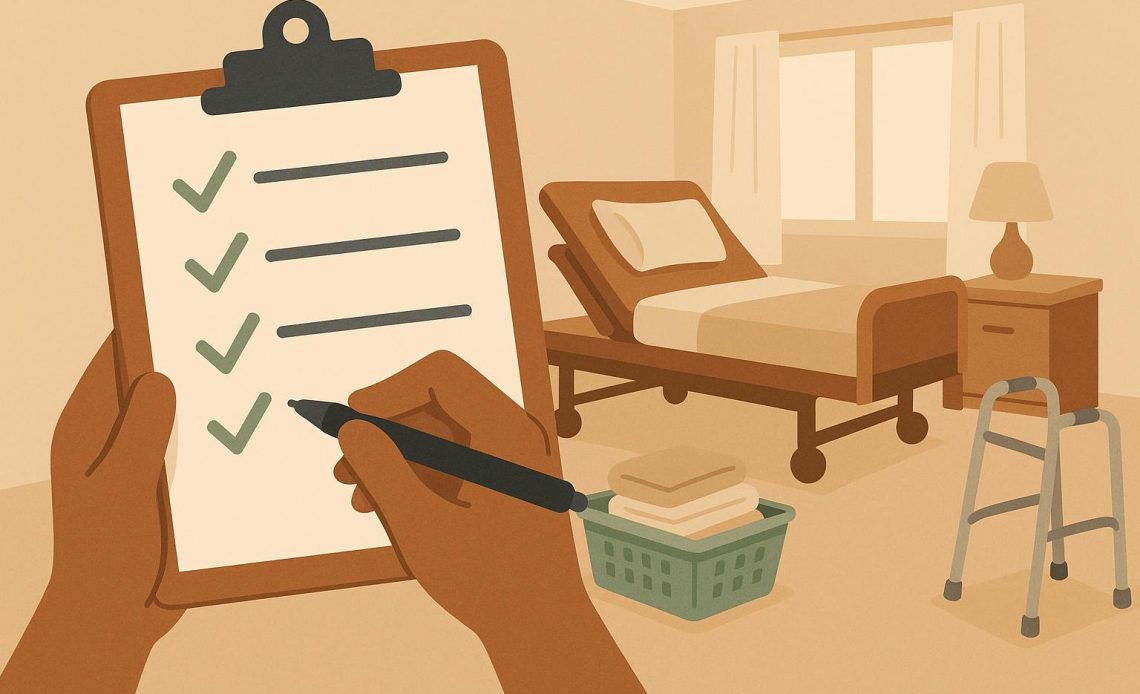
The home is where care succeeds or struggles. A few focused fixes before day one can lower fall risk and reduce stress for everyone in the house.
Many planning guides cover vetting caregivers and budgeting but devote less attention to the rooms where care happens. Common concerns include cords crossing halls, dim bathrooms, crowded medicine storage and furniture blocking turns. This checklist helps families address those issues before the first shift.
Clarify goals and daily routines
Start with a short family talk. Ask what matters most for health and comfort over the next few months. One family may want help with mornings and meals, while another may need steady support after a hospital stay. Write down two goals everyone agrees on and post them on the fridge.
Next, map the day as it really runs. Note wake time, bedtime, meals and nap habits. Include when energy dips and when a walk feels good. Don’t rely on memory. A one-page routine helps keep every shift consistent.
Include care preferences that protect dignity. Note shower style, water heat, clothing choices and privacy needs around bathing and dressing. Add food preferences and foods to avoid. Small details like these prevent daily friction.
Keep the sheet where the caregiver will see it. Review it on day one and adjust it after week one. It doesn’t need to be perfect. Clear notes are better than long conversations no one remembers.
Write health notes in plain language. List any help needed with baths and meals, then bring the page to the first nurse visit. It saves repeated conversations and keeps care close to familiar home habits. A lived routine often tells us more than a form, so include the small wins that show the day went well and the warning signs that mean it is time to call for advice.
Sort keys, access, privacy and pets
Care breaks down quickly when doors don’t open. Make two full sets of keys before care starts, and test every lock and code. Leave one set in a lockbox and give one to the lead caregiver. Write parking information and door codes in clear print.
Walk the entry path at night so you can see what a caregiver faces on a late shift. Trim bushes near the door and add a porch bulb that stays on. House numbers should be visible from the street. If stairs lead to the entry, check the rails for movement and tighten the screws now.
Discuss privacy early. Explain which rooms are open and which should stay closed. Set aside space for personal mail and valuables, and agree on knocking rules for bedrooms and bathrooms. Clear boundaries help trust develop faster.
Don’t forget pets. Note feeding times, leash locations and the vet’s name and number on the fridge card. Put treats and waste bags where the caregiver can reach them. If a dog jumps or guards rooms, make a plan to keep visits calm and safe.
Stock the fridge for the first few days with simple meals that heat quickly. Keep fruit and water within everyone’s reach, and throw out anything that smells off. A stocked fridge lets the caregiver focus on people rather than errands.
Reduce fall and fire risks in living areas
Falls drive most home injuries for seniors. 1 in 4 adults aged 65 and older falls each year (CDC). That fact should guide the order of work: clear pathways first, improve lighting next and then add secure grip points.
Begin in hallways and the living room, where people walk throughout the day. Roll up throw rugs or secure them on all sides with rug tape. Run cords along walls and fasten them with clips so they don’t cross walkways. Move chairs and side tables until clear pathways are wide enough for feet and wheels. Check each doorway for dark spots and add plug-in lights that remain on at night.
Lighting affects how safe a room feels. Replace dim bulbs with bright, warm bulbs of the same fit. Add motion lights in hallways and above stairs. Keep switches within reach and mark them with glow tape. Good lighting won’t prevent every trip, but it gives people more time to notice a chair leg or pet toy.
Mark changes in floor level clearly and repair loose transition strips. Do not improvise a ramp or rail without checking that its dimensions, surface and installation suit the person and the space. Check that daily routes accommodate the person’s current mobility aid, and ask an occupational therapist or qualified contractor for guidance if access is difficult.
Include fire safety in the preparation. Test smoke and carbon monoxide alarms according to the manufacturer’s instructions and replace batteries or units when required. Keep heating areas clear and follow the fire department’s guidance on extinguisher placement and use. If oxygen is used in the home, follow the supplier’s safety rules and keep it away from flames and heat. Review an accessible exit plan with everyone at home.
Have suitable handrails and grab bars installed where an individual assessment indicates they are needed, especially around stairs and bathing areas. Check existing supports for looseness. For trained input, request a home safety assessment from an occupational therapist or qualified care professional. A short visit often identifies cords and stools that residents overlook every day.
Get the bathroom, bedroom, kitchen and entry ready
The bathroom deserves early attention because wet surfaces and tight spaces can create hazards. Ask an occupational therapist or other qualified professional where grab bars are needed and have them securely installed. Do not assume a suction-mounted product can support a person’s full weight.
Use bathing and toilet equipment recommended for the individual’s needs, and check that each item is stable and used according to its instructions. Keep soap and towels within easy reach so the person does not have to cross a wet floor unnecessarily.
Prepare the bedroom for rest and safer nights. Adjust the bed height so both feet sit flat on the floor when the person is seated on the edge. Leave enough space on both sides for a steady stand. Plug in nightlights leading towards the bathroom, and keep a phone and water within reach on the table.
Think through clothing and useful tools. Move everyday shirts and trousers to low drawers, and place shoes with grip soles beside the bed. Hang a reacher and long shoe horn on a nearby hook. These daily living aids can help preserve privacy during morning routines.
Move frequently used kitchen items to waist height. Store plates, cups and weekly-use pots where they can be reached without a stool. Throw out expired food and label leftovers with dates. Keep a sturdy stool with a back for rest breaks, not for reaching high shelves.
Build safer kitchen habits into the routine. Turn pot handles inward and use back burners first. Keep towels and paper away from flames, and unplug small tools when they aren’t being used. If memory slips, add an auto shut-off or knob covers, then explain the plan to the caregiver. Fix sticking drawers and buzzing lights now because minor problems become harder to manage when a caregiver is handling medicines and meals on a tight schedule.
Organize medicines and emergency plans
Choose one secure location for medicines and keep them away from children, pets and anyone at risk of taking the wrong product. Maintain a current list of drug names and dose times. Use pill organisers only when the prescriber or pharmacist says they are suitable, and do not change doses or timing yourself. Contact the prescriber or pharmacist with questions.
Keep the poison control number on the same sheet. Leave medicines in their original bottles until you sort them, and lock extra supplies away from children and pets. Mark refills on a wall calendar. Keeping the list in one place makes missed doses less likely.
Post emergency details beside the medicine list. Include doctors’ names, after-hours numbers, allergies, the preferred hospital and who should be called first and second. Families considering AAHC home care or another provider can ask whether a pre-service home assessment is available and what it covers.
Consider whether a medical alert system would be useful if someone spends long periods alone, and compare how available systems work before choosing one. Test smoke and carbon monoxide alarms during the same week. Draw two ways out of each bedroom, and put flashlights with spare batteries beside the beds. Practise the route once so it feels familiar.
Preparation is care before care starts.
Post the complete contact sheet on the fridge. List family phone numbers, neighbour support, pharmacy details and clinic hours. Keep copies beside the bed and front door because paper still works when phones die. One large-print copy also helps tired eyes read quickly at night.
Create a caregiver workspace and communication log
Give the caregiver a home base. A small table or clear counter near the main care area works well.
Stock a caddy with gloves and wipes, then add spare batteries and a notebook to the same container. Keep extra briefs and pads on a low shelf, with rubbish bags and hand soap nearby. Restock each night so mornings begin clean and organised.
Start a daily log on day one so shift changes don’t depend on tired memories. Record sleep, appetite, mood and pain in clear terms the next aide can scan quickly. Report falls or near falls immediately. Brief notes help the next shift notice early changes and call sooner when necessary.
Plan a calm first-day walk-through. Show the caregiver the routine sheet, medicine area, breaker box and water shut-off. Point out outdoor steps and explain rubbish collection rules. Stay for the first hour if possible, then step back and allow trust to form.
Agree on how you’ll keep in touch. A group text suits quick updates in most homes, while a weekly call can cover broader needs. Keep the tone kind and direct. Small expressions of thanks matter when days are difficult. Adjusting the plan after day two is fine once you know what helps.
Leave a short welcome note for the first day. Explain where the log is kept, when you want updates, food rules, rest breaks and how to reach you quickly. A warm start with clear boundaries sets the tone for the months ahead.
Prepare for equipment and ongoing needs
Measure before equipment arrives. Record door widths, hallway turns and lip heights at entries and showers. Share those measurements with the equipment team. A bed or chair that can’t get through the hallway is no help.
Clear enough space for walkers and wheelchairs. Move plant stands and footstools away from turns, and gather pet toys into a bin each night. Leave turning room near the bed and toilet. Wide, straight routes work better than tight, complicated ones.
Match changes to the person’s health needs. For dementia, keep rooms calm and consistent. Use nightlights and labels on doors, lock away medicines and cleaners and keep paths free of unfamiliar objects.
For recovery involving joints or bones, follow the care team’s advice on seat height, mobility aids and weight-bearing limits. Keep prescribed equipment nearby and ask the care team to demonstrate safe movement for the individual’s situation.
Recheck the home after week one. Note remaining problems, move anything that blocks wheels and add light where eyes strain. Replace items the senior won’t use. Homes change as care needs change, so keep the checklist active on the fridge.
Use the person’s actual mobility equipment and professional recommendations to guide widths, turning space and any ramp work. Keep routes open, then review the plan each month. Needs change, and the home should adapt with them.
You don’t need a remodel to make a good start. Clear floors, bright rooms, stocked shelves and honest notes can make the first week easier. Do that weekend work now.