
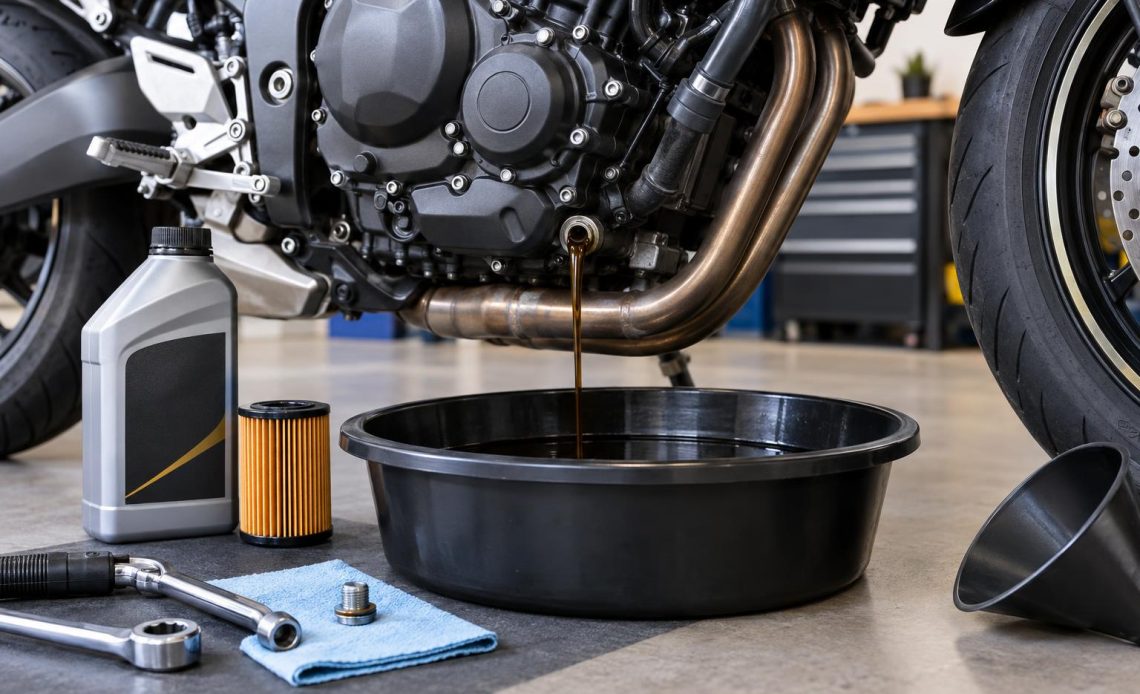
Engine oil plays an important role in keeping a motorcycle running smoothly. It lubricates moving components, helps control heat and carries contaminants towards the oil filter. Over time, however, the oil can become contaminated and its performance can gradually decline.
Changing the oil at the recommended interval is therefore an important part of motorcycle maintenance. While the process is relatively straightforward on many bikes, it needs to be done carefully using the correct oil grade, quantity and procedure for the specific motorcycle.
8 Steps to Change a Bike’s Engine Oil
Here’s a step-by-step guide to changing your bike’s engine oil. Also, it is important to consider the right engine oil, such as Castrol POWER1 engine oil, to help support efficient engine operation.
Step 1: Check the Oil Requirements First
Before starting, confirm the engine oil specifications recommended by the motorcycle manufacturer. Pay attention to three main factors:
- Viscosity grade: Numbers such as 10W-30, 10W-40 or 15W-50 indicate how the oil behaves at lower and higher temperatures.
- API specification: This identifies the performance standard that the lubricant meets.
- JASO classification: Motorcycles with wet clutches commonly require JASO MA or MA2 oils with suitable friction characteristics.
Also confirm the required oil capacity. The amount may differ depending on whether the oil filter is being replaced.
Step 2: Gather the Necessary Tools
Having everything ready before draining the oil makes the process easier. You may need an oil drain pan, suitable spanners or sockets, a funnel, gloves and a clean cloth.
If the motorcycle uses a replaceable oil filter, keep the correct replacement filter and any required sealing washer ready as well. Work on a stable, level surface and make sure the motorcycle is supported securely.
Step 3: Warm the Engine Slightly
Run the engine briefly before changing the oil. Slightly warm oil generally flows more easily, which can help old lubricant drain from the engine.
Avoid working immediately after a long ride when the engine and exhaust system may be extremely hot. Allow sufficient time for components to cool to a safe working temperature.
Switch off the motorcycle and position the drain pan beneath the drain plug.
Step 4: Drain the Old Engine Oil
Find the engine oil drain bolt and remove it using the correct tool. Allow the oil to flow completely into the drain pan.
Take care not to lose the sealing washer fitted to the drain bolt. Some manufacturers recommend replacing this washer during an oil change to help maintain a proper seal.
Step 5: Replace the Oil Filter if Required
Motorcycles may use cartridge filters, spin-on filters or internal strainers depending on their design.
If the oil filter is due for replacement, remove it according to the motorcycle manufacturer’s procedure. Clean the surrounding area before fitting the new filter so dirt does not enter the lubrication system. Follow the specified tightening procedure rather than overtightening the filter.
Step 6: Refit the Drain Plug
Check the drain plug and sealing surface before refitting them. Also, clean old oil or dirt and install the plug with the correct washer.
Tighten it to the torque specified by the motorcycle manufacturer. Excessive tightening can damage the threads or engine casing, while insufficient tightening may allow oil to leak.
Step 7: Add Fresh Engine Oil
Place a clean funnel in the oil filler opening and then add the recommended quantity. Ensure that you do not overfill as overfilling the oil can affect engine operation. You can check the level using the sight glass or dipstick as recommended for the motorcycle.
Start the engine a little to allow the fresh oil to circulate. Switch it off, wait for the recommended period and check the oil level again.
Step 8: Check for Leaks
Inspect the drain plug, oil filter and surrounding areas for signs of leakage. If the oil level has settled below the required mark, add a small amount and check again. Avoid filling beyond the maximum level.
Used engine oil should be collected safely and then take it to a recycling or disposal facility rather than poured onto the ground or into drains.
Conclusion
Routine oil changes are an important part of keeping a motorcycle’s lubrication system in good condition. Use the correct oil grade, replace the filter when required and check the final oil level carefully. Castrol POWER1 engine oil may be a suitable option where its specifications align with the motorcycle manufacturer’s recommendations.