
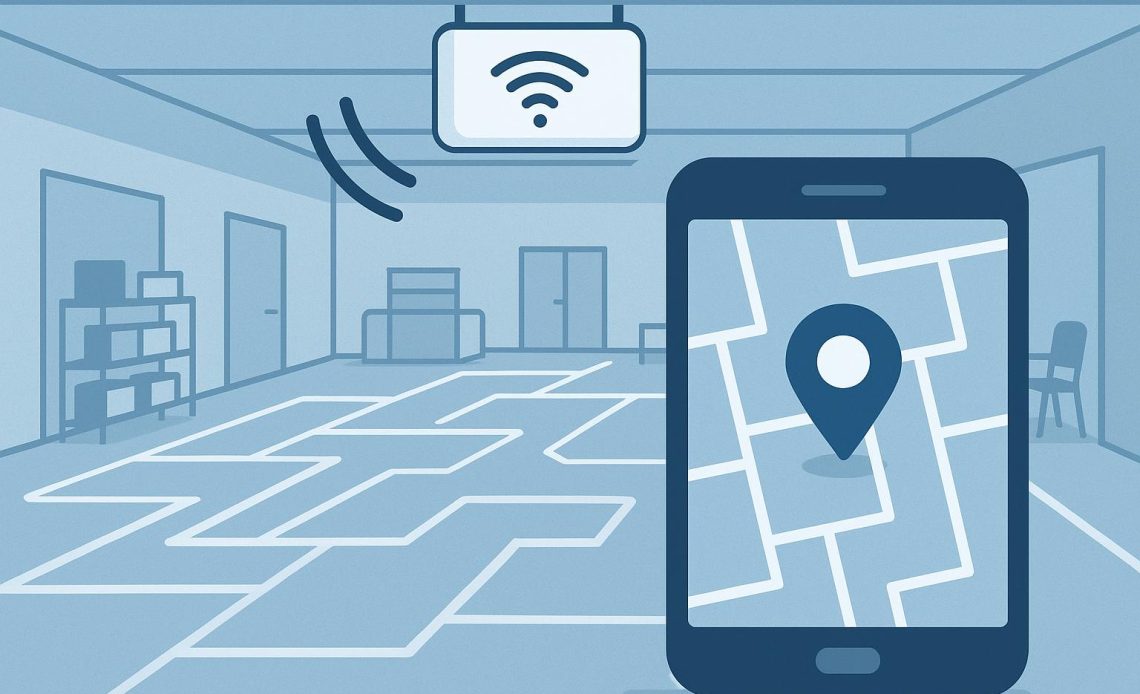
Operating a massive industrial facility is a constant battle against physical blind spots. When assets move indoors, traditional tracking methods completely fall apart. Global positioning systems cannot penetrate thick concrete ceilings or navigate through heavy steel racking. This leaves operations directors completely blind as the second a critical component enters the building.
Relying on manual scans or basic proximity buzzers creates a chaotic environment where margins bleed out on the concrete floor. That is exactly why upgrading your indoor location tracking is no longer just an IT project. It is an absolute requirement for protecting your daily throughput. You cannot optimize a high velocity facility when your most expensive mobile assets are functionally invisible.
ROI Loss Due to Missing Inventory Tracking
When your indoor visibility fails, the financial damage hits the balance sheet instantly. Ghost stock becomes a daily reality. A worker drops a pallet of raw materials in the wrong staging lane, and it vanishes from the enterprise’s resource planning software.
The system assumes the material is exactly where the last manual scan is indicated. Plant managers are forced to tear down physical setups and switch product runs to accommodate the missing inventory. This firefighting destroys your shift efficiency entirely.
Most facilities try to hide this operational failure by hoarding buffer stock around the automated cells. This hoarding behavior just clutters the concrete and actively suffocates the movement of your automated vehicles. It also triggers a toxic cycle of panic buying. Procurement teams authorize expensive expedited shipping fees to replace specialized tools the facility already owns.
Passive Tracking Leads to Chokepoint Manufacturing Architecture
Passive tracking creates a flawed chokepoint architecture. It requires an asset to physically pass through an electromagnetic field at a specific doorway to register a location update.
In a modern, dynamic manufacturing cell, assets do not move in a straight, predictable line. They move irregularly based on real-time production demands. When a work in progress carrier gets pulled aside for a quality rework, it falls completely off the passive grid.
The software still thinks the asset is progressing the line. This creates a catastrophic scheduling conflict that ruins the daily quota. A chokepoint system simply cannot handle the high velocity chaos of a modern floor.
Ending Dashboard Fatigue with RTLS
Software vendors historically sold legacy tracking systems by promising total operational control through complex digital dashboards. Instead, they delivered stale data. Floor managers are flooded with delayed, zonal alerts that offer zero physical context.
Knowing that a specialized forklift was seen in zone four twenty minutes ago is completely useless. Shift supervisors staring down an active line stoppage need immediate ground truth. When the software constantly contradicts the concrete floor, the operators completely abandon the system.
They revert to shouting over the noise and walking the aisles to hunt for parts. A tracking infrastructure that your floor staff actively ignores is a pure operational liability. It gives the front office a false sense of security while the physical floor remains highly inefficient.
Escaping Legacy Hardware Restrictions with LocaXion
A major hurdle in fixing these operational blind spots is the trap of hardware lock in. Legacy vendors force facilities to buy their proprietary tags and closed loop antennas. When your footprint expands, you are held hostage by a single manufacturer.
Modern facilities demand agnostic infrastructure. You must have the freedom to deploy a heavy-duty tag for a massive steel carrier and a low-cost active beacon for a simple plastic tote. Open architecture allows your facility to dynamically adapt to shifting demands without paying extortionate integration fees.
Active Real-Time Monitoring Benefits with RTLS Indoor Tracking
The industry is aggressively shifting away from passive chokepoints. Active tracking tags do not wait to pass a reader portal. They broadcast their exact location multiple times per second, regardless of where they are in the building.
This provides continuous operational mapping. It completely eliminates the physical blind spots of reader portals and passive chokepoints. You stop reacting to stale data and start actively managing the physical flow of your operations.
If a critical component is delayed, the system actively adjusts the downstream build sequence before the assembly line actually stops. It bridges the physical and digital worlds permanently, feeding undeniable ground truth directly into your manufacturing execution system. This level of physical control is exactly what you get when you deploy a modern enterprise RTLS.
Engineering the Foundation of Your Operations
LocaXion is the world’s first pure-play RTLS & Digital Twin systems integrator. We engineer systems for your business outcomes-not just “tracking.”
That means less risk, less integration of guesswork, and faster time-to-value. And because we’re not locked to one technology stack, you get the freedom to scale with the right technology-not the technology we happen to sell.
RTLS tracks your assets. LocaXion transforms how your operation runs.
That’s the difference. And it’s not a small one.
Stop physical blind spots and wasted margins and engineer your outcomes today at https://locaxion.com/