
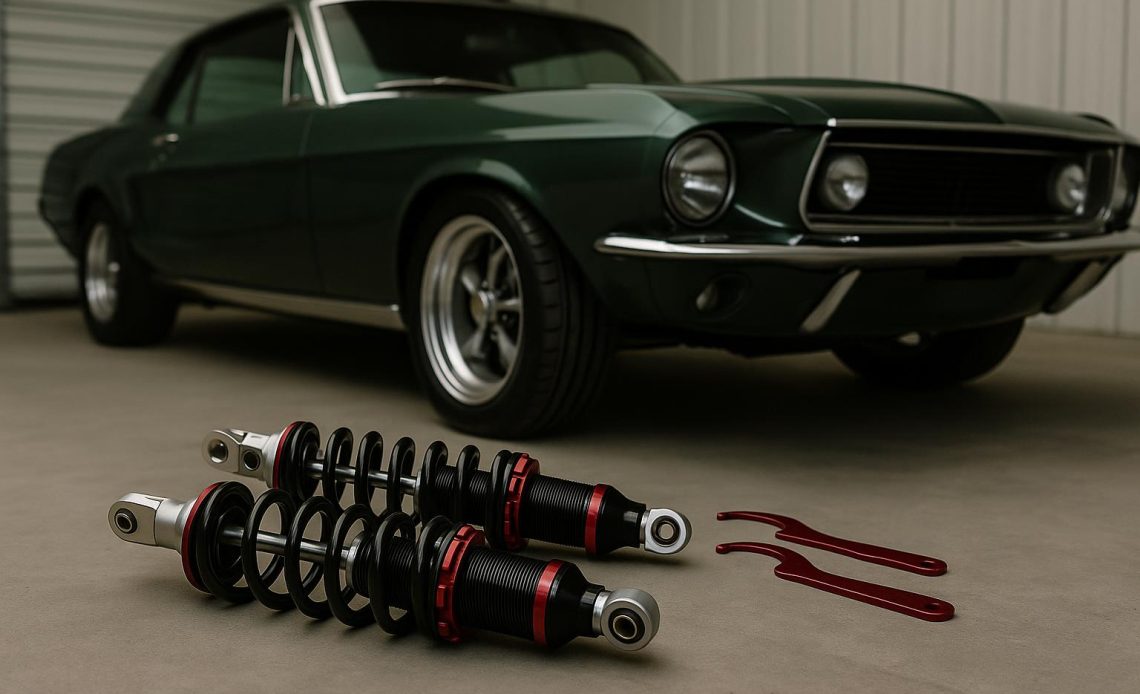
Every classic car owner eventually meets the limits of factory suspension. The nose dives under braking, the body leans through corners like a ship in weather, and the ride height sits somewhere between “stock” and “covered wagon.” The stock springs and shocks were engineered for bias-ply tires and 1960s expectations, and no amount of new rubber fixes engineering that old. That’s the point where many builders discover the upgrade that transforms how these cars drive: the coilover conversion.
What a Conversion Actually Is
A coilover conversion kit replaces a car’s original spring-and-shock arrangement with coilovers: units that combine the coil spring and the shock absorber into one adjustable assembly, with the spring wrapped around the shock body. Instead of the factory’s separate spring perch and shock doing loosely coordinated work, a coilover delivers both functions in one engineered, matched package.
The word “conversion” matters because classics weren’t built for these. Depending on the vehicle, the kit converts from separate front coil springs and shocks, or from rear leaf springs, to the modern coilover arrangement, using mounting hardware designed for that specific chassis.
Why Owners Bother
Adjustable ride height is the headline feature. Coilovers use a threaded shock body with an adjustable spring seat, letting you raise or lower the car by turning a collar. Want the stance lowered a couple of inches for the show, or fine-tuned so the rake sits exactly right? That’s a wrench adjustment, not a new set of springs.
Adjustable damping is the driving feature. Many kits include shocks with adjustable rebound or compression settings, so the same car can ride comfortably on the highway Saturday and firm up for spirited backroad driving Sunday. Factory suspension made that choice for you permanently; coilovers hand the choice back.
Matched components work better. Because the spring rate and shock valving are engineered together, coilovers control body roll, brake dive, and squat far better than tired factory pieces or mismatched replacements. The car turns in sharper, settles faster, and puts power down with less drama.
Corner-to-corner tuning. Since each corner adjusts independently, builders can level a car precisely, even accounting for the weight of a big block up front.
The Honest Considerations
Coilovers aren’t a blind upgrade, so a few realities deserve mention. Quality matters enormously: this is the component holding your classic to the road, and bargain units with inconsistent valving deliver a worse ride than good factory-style replacements. Setup matters too: after installation, the car needs a proper alignment, and ride height changes affect geometry, so plan for a session of adjusting and test driving rather than a set-and-forget install. And while modern kits for popular American classics are engineered as bolt-ins using factory mounting points, rear leaf-spring conversions are more involved than front swaps, so read the instructions honestly before promising the car back by Sunday.
When choosing a kit, favor manufacturers who engineer applications for your specific year and model, build in the USA with real warranties, and staff a tech line that answers fitment and tuning questions. Suspension is the wrong category for mystery-brand savings.
The Bottom Line
A coilover conversion is the difference between a classic that looks fast sitting still and one that genuinely drives the way it looks. For owners who actually drive their cars, few upgrades change the daily experience more: the stance you want, the ride you choose, and handling the original engineers could only have imagined.