
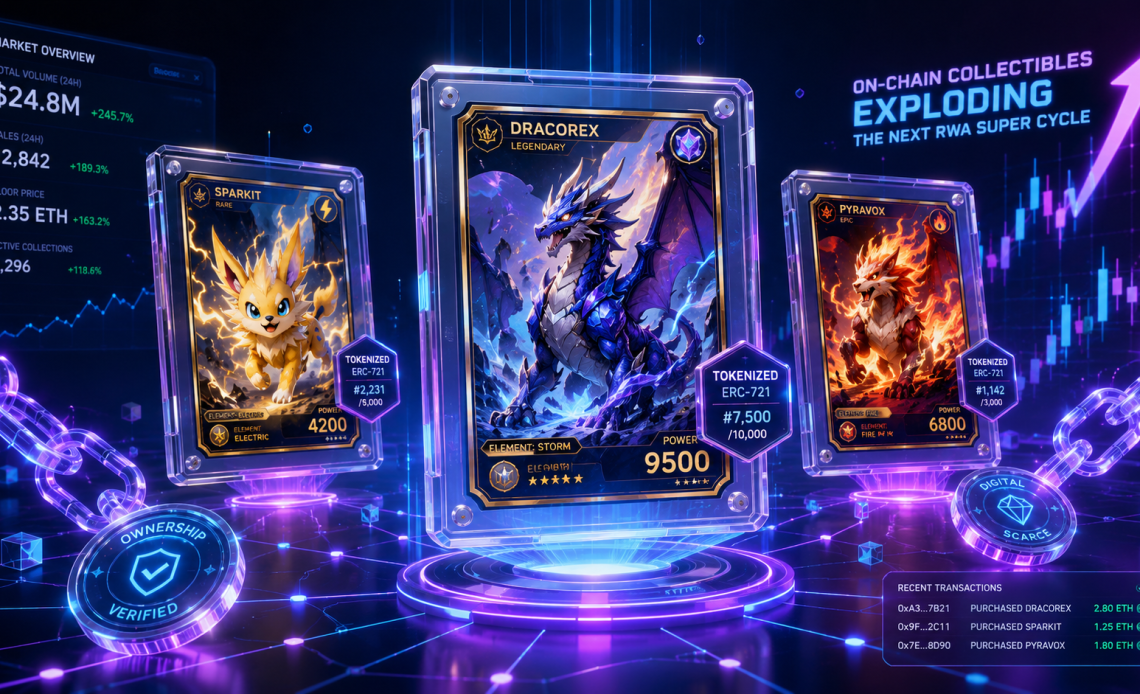
A simple look at why on-chain Pokémon card trading is becoming a hot RWA market
Pokémon cards are no longer just childhood collectibles.
For many collectors, rare Pokémon cards have become investment assets. Some cards sell for thousands or even millions of dollars. But physical card trading has always had problems. Buyers worry about fake cards, shipping damage, storage, grading, and trust.
Now, blockchain is changing the way these cards are traded.
In the first week of May 2026, tokenized Pokémon card-related sales reportedly reached about $7.4 million, hitting an all-time high. The figure was also reported as a 337% increase compared with the same period last year. Courtyard led the market with around 46% share, followed by Collector Crypt and Phygitals.
So why are tokenized Pokémon cards suddenly becoming popular?
Let’s break it down.
What Are Tokenized Pokémon Cards?
Tokenized Pokémon cards are digital tokens that represent real physical Pokémon trading cards.
In many cases, the physical card is stored by a trusted custodian. The owner holds a blockchain token that represents the card. This token can then be bought, sold, or transferred online.
This makes trading easier.
A buyer does not need to wait for international shipping every time a card changes hands. A seller does not need to worry about packaging or delivery damage. The card can stay safely stored while the digital ownership moves on-chain.
Polygon has described Courtyard as a platform that helps users mint real-world collectibles as NFTs, allowing them to buy and sell items online without physically shipping the item unless someone wants to redeem it.
This is why tokenization works well for rare trading cards.
Why Tokenized Collectibles Are Growing
Tokenized collectibles are part of the larger real-world asset trend.
Tokenization means creating a digital representation of a real asset on a blockchain. This can apply to stocks, bonds, real estate, art, luxury goods, or collectibles. McKinsey explains tokenization as creating a digital representation of a real thing.
For collectibles, the value is clear.
Collectors want proof of ownership.
They want easier trading.
They want better liquidity.
They want lower friction.
They want fewer risks from shipping and fraud.
Physical collectibles are valuable, but they are not always easy to trade quickly. Tokenization solves part of that problem by turning a physical item into a tradable digital asset.
This is especially useful for Pokémon cards because the market already has strong collector demand.
Why Pokémon Cards Are a Perfect Test Case
Pokémon has a large global fan base.
Many people understand the brand. Many collectors already know which cards are rare. Grading systems already exist. Prices are already visible across marketplaces.
This makes Pokémon cards easier to tokenize than many other collectibles.
The 30th anniversary of the Pokémon IP has also helped bring more attention to the market. Reports linked the recent trading surge partly to renewed interest around this anniversary.
There is also a strong emotional factor.
Some buyers are not only investing. They grew up with Pokémon. They understand the culture. They want exposure to a collectible market they already trust.
That combination of nostalgia, scarcity, and blockchain liquidity is powerful.
What Are the Risks?
Tokenized Pokémon cards still have risks.
First, buyers must trust the custodian. If the physical card is not stored safely, the token loses credibility.
Second, buyers must understand redemption rules. Can they claim the physical card? Are there fees? How long does it take?
Third, market prices can move quickly. A tokenized card may become popular, but that does not mean it is always a good investment.
Fourth, fake demand is possible in any digital market. Wash trading and speculation can make volume look stronger than real collector demand.
So users should not treat every tokenized card as a guaranteed profit opportunity.
Final Thoughts
The explosion of tokenized Pokémon card trading shows that RWA tokenization is no longer only about financial assets.
Collectibles can also move on-chain.
Tokenized Pokémon cards are popular because they solve real problems in physical card trading. They reduce shipping friction, improve online liquidity, and make rare collectibles easier to access.
But the market still depends on trust. Custody, grading, redemption, and marketplace transparency all matter.
The $7.4 million weekly sales record shows strong demand. But the long-term winner will not simply be the platform with the most hype. It will be the platform that can prove the physical card is real, safely stored, fairly priced, and easy to trade.
That is why tokenized collectibles may become one of the most interesting RWA stories in crypto.