
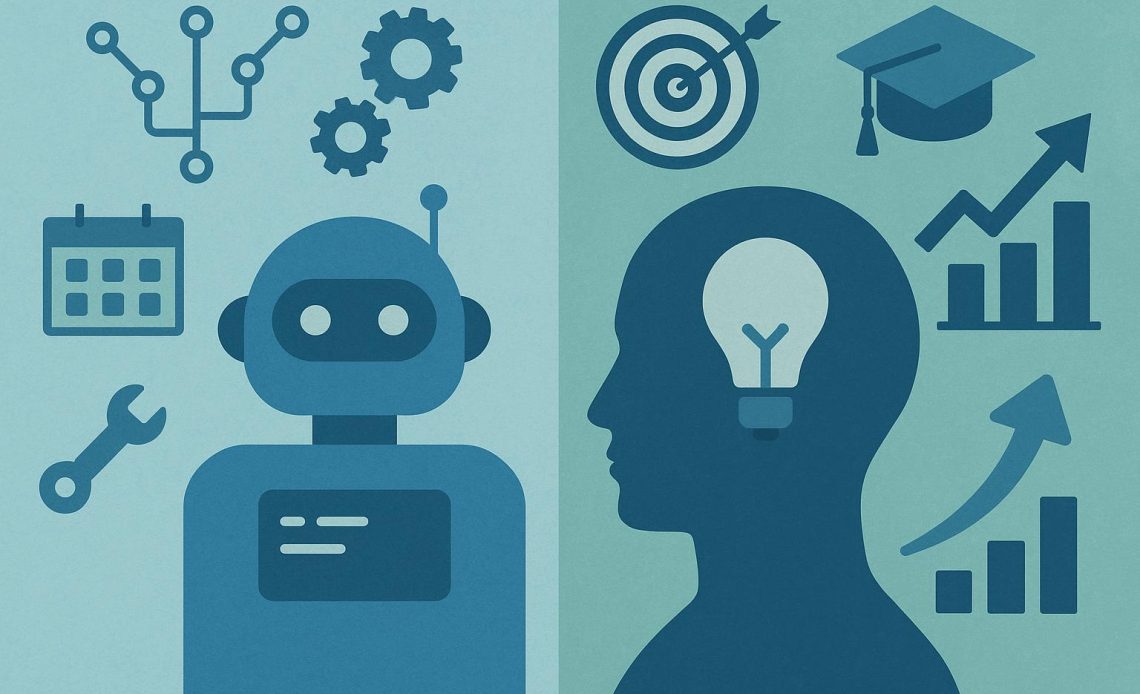
Artificial intelligence is quietly taking over the boring parts of work. Scheduling, invoicing, sorting messages, and tracking data used to eat up hours of every workday. Now, AI tools can handle most of that in seconds. At first glance, this might feel like humans are becoming less useful. But a closer look at businesses actually using AI tells a different story. When machines take over the routine, people are not left with nothing to do. They are left with the most important work of all, the kind that requires judgment, empathy, and real human connection.
It is easy to assume that automation always shrinks the role people play in a business. History suggests something different. Every time a repetitive task gets automated, the humans involved usually end up spending more time on the parts of the job that actually matter to the customer or the client. AI is following that same pattern, just faster and across more industries at once.
This shift is happening across almost every industry, from education to healthcare to hiring. A tutor no longer needs to spend hours managing invoices and scheduling makeup lessons. A manager no longer needs to spend an entire evening building next week’s staff schedule by hand. As these routine tasks disappear, something interesting happens. The people who once felt buried under admin work suddenly have room to focus on the parts of their job that actually require a human touch, like coaching a struggling employee or helping a nervous student build confidence.
This does not mean the shift is automatic or easy. Businesses still have to make a deliberate choice about what to do with the time AI frees up. Some companies simply pile on more tasks, treating saved hours as extra capacity for more output. The businesses actually getting ahead are the ones treating that saved time as an investment in people, not just a chance to do more of the same thing faster.
Of course, this shift also raises a real question. If AI can now handle scheduling, communication, and even some teaching content, what exactly should humans focus on getting better at? The answer is not about competing with AI on speed or memory, since machines will always win that contest. Instead, the opportunity lies in strengthening the skills that AI cannot replicate, listening closely, reading emotion, building trust, and making thoughtful judgment calls in situations that do not follow a simple pattern.
These skills have always mattered, but they used to compete for attention with a mountain of administrative work. Now that AI is clearing that mountain away, there is finally room to treat these human skills as a priority instead of an afterthought squeezed in between tasks.
Business leaders across very different fields are already living out this shift firsthand. Some run tutoring platforms, others manage employee schedules, and others build spaces for people to talk to complete strangers online. Despite their differences, they are all discovering the same lesson. The businesses winning right now are not the ones removing humans from the equation. They are the ones using AI to clear away the noise so people can focus on doing what people do best.
AI Frees Up Time, But People Still Decide How to Use It
The most obvious benefit of AI handling routine work is time. But time alone does not automatically make a business better. What matters is what people choose to do with the hours they get back. Some businesses use that extra time to work faster. The smartest ones use it to work more thoughtfully, spending that reclaimed time on relationships instead of just squeezing in more tasks.
This is the difference between using AI as a shortcut and using AI as a strategy. A shortcut just gets the same old work done a little quicker. A strategy asks a bigger question, now that this task takes almost no time at all, what should we be spending that time on instead. The businesses below have each answered that question in their own way.
Sandro Kratz, Founder of Tutorbase, built his company after watching tutoring centers across Asia drown in the same scheduling and billing headaches every single week.
“We built Tutorbase because tutoring center owners were drowning in scheduling and billing instead of teaching. Our users now report a 50 percent drop in admin workload once AI takes over the repetitive scheduling and invoicing tasks. That extra time does not disappear, it goes straight back into lesson planning and real conversations with students. When AI handles the routine, educators get better at the part only humans can do, actually connecting with a learner.”
This same pattern shows up clearly in workforce management, where scheduling used to be one of the most dreaded tasks for any manager. Kyle Bolton, Founder of CrewHR, built his platform specifically to remove that burden so leaders could spend their energy on people instead of paperwork.
“CrewHR exists because managers were spending entire Sunday nights building rotas instead of leading their teams. Once our AI builds a conflict-free schedule automatically, that time gets reinvested into coaching staff and solving real problems on the floor. I have watched business owners go from reactive scheduling to actually planning growth for the first time. When AI removes the busywork, leaders need to get sharper at the human skills, listening, coaching, and building trust.”
The Human Skills That Matter Most When AI Handles the Rest
As AI takes over more repetitive tasks, the skills that separate a good professional from a great one are shifting. Technical speed matters less when a machine can already move fast. What matters more is the ability to connect with another person, understand what they actually need, and respond with patience and care. This shift is especially visible in fields built entirely around human connection, like education and social interaction.
Interestingly, this shift does not require people to learn something completely new. Most professionals already have these human skills somewhere inside them. The real challenge is finding the time and the willingness to actually practice them, instead of letting admin work push them to the side.
Tornike Asatiani, Founder and CEO of Edumentors, has watched this play out directly with tutors from Cambridge, Oxford, and other top UK universities who now use AI tools to support their teaching rather than replace it.
“At Edumentors, our tutors come from Cambridge and Oxford, but AI now handles a lot of the routine practice and content delivery. That frees our tutors to focus on what a machine cannot replace, motivation, mentorship, and genuine encouragement. We have watched students go from dreading a subject to genuinely enjoying it once a tutor has time to actually connect with them. As AI takes over repetition, human tutors need to get better at inspiring confidence, not just explaining facts.”
This idea extends even further into how people meet and talk to each other online. Becky Stones, Founder of StrangerLine, has spent years studying how technology shapes the way people build friendships, and she has seen firsthand what AI can and cannot do in that process.
“I built StrangerLine because meeting someone new online had become oddly hard, even though technology made it easier than ever. AI can filter matches and handle the logistics, but it cannot replace the courage it takes to actually open up in a conversation. We have seen that the platforms people trust most are the ones that still feel genuinely human on the other side. As AI handles the busywork of meeting people, humans need to get better at simply being present once the conversation begins.”
The Real Opportunity Is Getting Better at Being Human
These four stories, spanning tutoring, workforce management, mentorship, and online connection, all point toward the same conclusion. AI is not making human skills less important. It is making them more valuable than ever, because those skills are the one thing machines still cannot fully replicate. The businesses paying attention to this shift are not asking how to remove people from the process. They are asking how to free their people up to do the parts of the job that actually require a human heart and a human mind.
Looking ahead, the individuals and companies that thrive will be the ones who treat AI as a tool for creating space, not a replacement for connection. As machines take over scheduling, admin, and repetitive tasks, the real competitive advantage will belong to the people who use that extra time wisely. Whether that means becoming a better listener, a more patient mentor, or a more thoughtful leader, the lesson is the same across every industry. When AI handles the routine, the most valuable thing a person can do is get better at being human. That simple shift in focus may end up being the biggest opportunity this new wave of technology has to offer.