
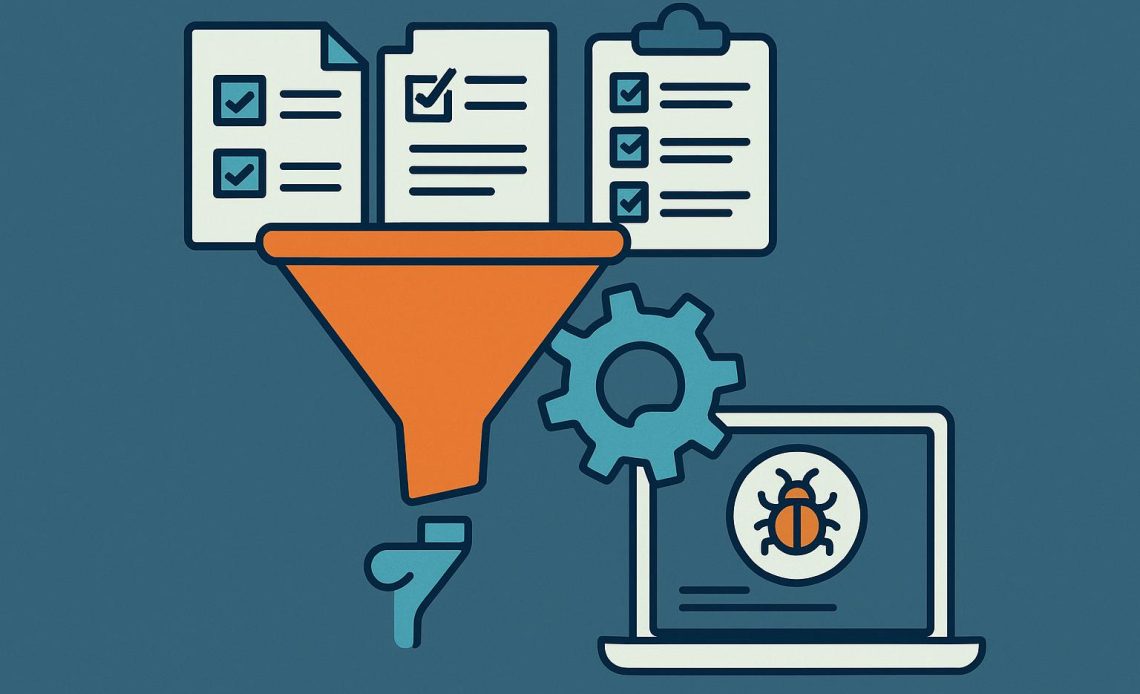
Software development teams are shipping features faster than ever. Agile methodologies, continuous integration, and rapid release cycles have transformed how applications are built and delivered. Yet many quality assurance teams are still relying on a process that hasn’t evolved at the same pace: manual test case creation.
While manual test design has long been a standard practice in software testing, it is increasingly becoming a bottleneck that slows down development, consumes valuable resources, and limits testing coverage. As organizations strive for greater efficiency, AI-powered solutions are emerging as a practical way to modernize test design and documentation.
The Growing Complexity of Modern Applications
Today’s applications are more complex than those of a decade ago. They often span multiple platforms, integrate with numerous third-party services, and support a wide variety of user workflows.
For QA teams, this complexity creates a significant challenge. Every new feature requires a set of test cases that validate expected behavior, uncover potential failures, and ensure a consistent user experience. As applications grow, the number of required test scenarios increases exponentially.
Manually identifying and documenting all these scenarios can take days or even weeks, especially for large releases.
Why Manual Test Case Creation Slows Teams Down
Creating test cases manually involves several time-consuming steps:
- Reviewing requirements and specifications
- Identifying user workflows
- Designing positive and negative test cases
- Documenting expected results
- Maintaining existing test documentation
- Updating test cases when requirements change
This process demands significant effort from experienced QA professionals. Instead of focusing on exploratory testing, risk analysis, and quality improvements, testers often spend a large portion of their time writing and maintaining documentation.
As release cycles become shorter, this documentation-heavy approach can delay testing efforts and create gaps in coverage.
AI Is Transforming Test Design
Artificial intelligence is changing how teams approach test case generation. Rather than starting with a blank document, testers can leverage AI tools to automatically generate test scenarios based on requirements, user stories, acceptance criteria, and existing documentation.
Modern AI tools can generate positive, negative, and edge-case scenarios from requirements documents, dramatically reducing test preparation time.
Large language models such as Claude have become particularly valuable for QA teams because they can analyze requirements, identify missing test coverage, suggest boundary conditions, and generate comprehensive test cases in seconds. As discussed in the guide on Claude for QA Engineers, these AI assistants can help accelerate many testing activities, from test design and documentation to exploratory testing preparation and bug analysis.
By automating the initial creation process, QA teams can focus on reviewing, refining, and prioritizing tests instead of manually documenting every possible scenario. This allows organizations to maintain quality standards while accelerating software delivery. However, AI-generated test cases should still be validated by experienced testers to ensure they accurately reflect business requirements and real-world user behavior.
Improving Test Coverage with AI
One of the biggest advantages of AI-assisted test design is its ability to identify scenarios that humans may overlook.
When working under tight deadlines, testers naturally focus on the most obvious user paths. However, edge cases, boundary conditions, and unusual user behaviors are often missed.
AI models can analyze requirements systematically and generate a broader range of scenarios, helping teams improve coverage and reduce the risk of production defects. This creates a stronger testing foundation without requiring additional manual effort.
Faster Documentation and Easier Maintenance
Maintaining test documentation is often as challenging as creating it.
Requirements change frequently throughout the development lifecycle. When they do, QA teams must review and update existing test cases to ensure they remain relevant.
AI-powered solutions can help by generating updated test documentation whenever requirements evolve. This reduces maintenance overhead and helps ensure that test repositories stay aligned with current product functionality.
The result is a more agile QA process that adapts quickly to changing business needs.
Looking Beyond QA: The Broader Impact of AI
The influence of artificial intelligence extends far beyond software testing. Organizations are using AI to improve content creation, customer support, business analytics, workflow automation, and decision-making across multiple departments.
For professionals interested in understanding how AI is transforming not only QA but also other industries and business functions, NeuroBits AI provides valuable insights, trends, and educational resources covering the evolving AI landscape. Exploring these broader applications can help teams identify new opportunities to leverage AI throughout their organizations.
The Future of Test Case Creation
Manual test case creation will continue to play a role in quality assurance, particularly for highly specialized workflows and exploratory testing activities. However, relying entirely on manual processes is becoming increasingly difficult as software complexity and release frequency continue to grow.
AI-powered test design offers a practical solution by reducing repetitive documentation work, accelerating test preparation, and improving coverage. Teams that adopt these technologies can spend less time creating test cases and more time focusing on what matters most: delivering high-quality software with confidence.
As AI capabilities continue to advance, intelligent test generation is likely to become a standard component of modern QA workflows rather than an optional enhancement.