
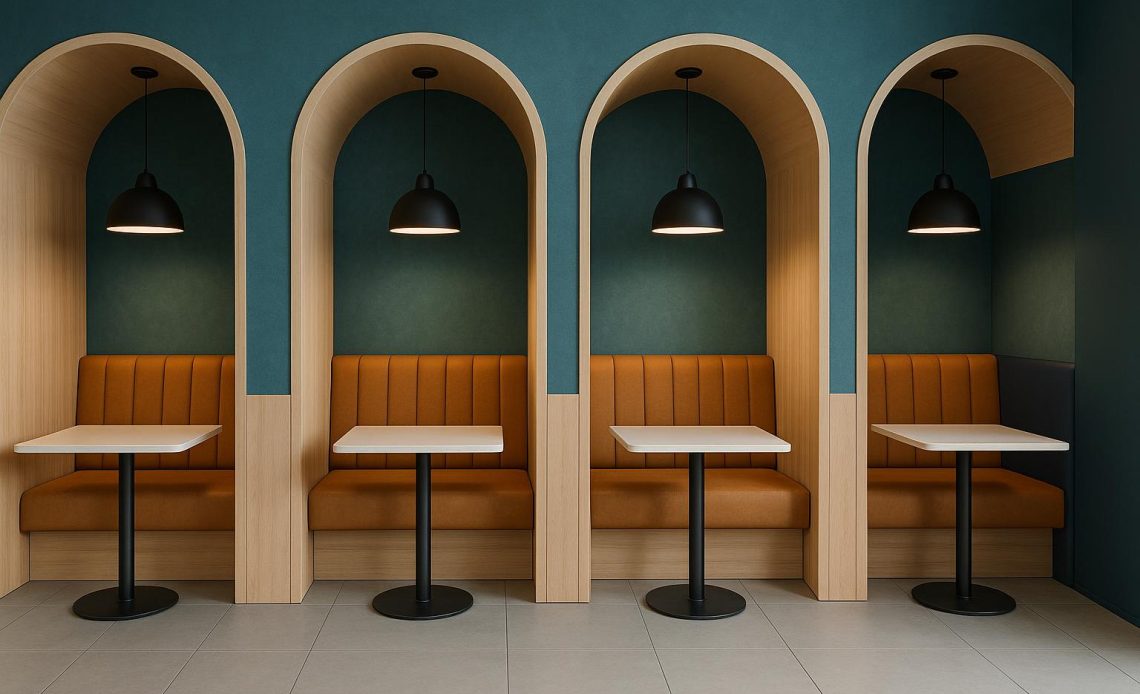
Tech hubs, gaming lounges, and coworking cafés may look like different worlds at first glance. One is filled with founders, developers, product teams, and investors moving between laptops and pitch calls. Another hums with screens, headsets, tournaments, and groups of players leaning into shared digital worlds. The coworking café sits somewhere in between, serving coffee, community, and a flexible place to work without the stiffness of a traditional office.
Yet all three spaces are quietly making the same furniture decision. They are installing booth seating.
This is not a random design trend. Booths are becoming the physical answer to a very modern problem: people want openness, but they also want control. They want social energy, but not constant exposure. They want to work, meet, eat, play, stream, study, and talk without feeling like they are floating in a room with no edges.
That is why booth seating restaurant solutions are showing up in places that are not traditional restaurants at all. Tech hubs, gaming lounges, and coworking cafés are using them because they create comfort, privacy, and structure in spaces where people stay, connect, and move between different activities.
In an era when coworking spaces are growing rapidly, operators are paying much closer attention to how every square foot performs. Gaming lounges are following a similar path, with demand rising as players seek more immersive and social environments outside the home.
Booth seating fits neatly into that shift because it does more than offer a place to sit. It creates zones. It softens noise. It gives people a sense of privacy without building walls. Most importantly, it turns a shared commercial space into a place where people actually want to stay.
The New Demand for Semi-Private Space
Open layouts once symbolized innovation. Tech offices removed cubicles. Cafés added communal tables. Gaming lounges opened wide rooms filled with rows of stations. The message was clear: openness meant energy.
That idea still matters, but it has matured.
People now want spaces that can shift between collaboration and focus. A developer may need a quiet corner for code review. A gamer may want a protected seat where the screen feels personal. A remote worker may need to take a call without feeling as if everyone in the room is watching. Booth seating gives them all a small pocket of control.
The appeal is psychological as much as practical. A booth creates a back, sides, and a defined boundary. It says, this is your space for the next hour. That simple feeling changes how people behave.
They settle in.
They open laptops.
They order another coffee.
They talk longer.
They return more often.
In coworking cafés, this matters because dwell time often supports revenue. In gaming lounges, it matters because comfort affects the length of sessions. In tech hubs, it matters because better informal seating can turn a hallway conversation into a useful working session.
Booths Turn Noise Into Atmosphere
Modern shared spaces are loud in many small ways. Keyboards click. Espresso machines hiss. Headsets leak sound. Teams talk through product ideas. Chairs move. Notifications ping. Someone laughs too loudly during a game. Someone else starts a video call two tables away.
Total silence is not the goal. These places depend on energy.
The challenge is shaping that energy so it feels alive rather than chaotic. Booth seating helps because upholstered backs, padded seats, and enclosed shapes can soften the room. They interrupt sound movement and reduce the hard, echoing quality that often comes from open layouts filled with glass, concrete, metal, and screens.
For operators, this creates a better balance between activity and comfort. A gaming lounge can feel intense without becoming exhausting. A coworking café can feel busy without becoming distracting. A tech hub can feel collaborative without making every conversation public.
That is why booths are not simply decorative. They are part of the acoustic strategy, especially in places where people may stay for several hours at a time.
Better Seating Means Longer Visits
One uncomfortable chair can shorten a visit. Multiply that by dozens of guests every day, and seating becomes a business issue.
Booths are popular because they invite longer use. They offer support, cushioning, and a sense of pause that standard loose chairs often cannot match. In a café, that comfort may lead someone to order lunch after coffee. In a gaming lounge, it may help players stay through a full session. In a tech hub, a quick meeting may turn into a deeper conversation.
The best operators understand that furniture affects behavior. Booths can support:
- Longer work sessions without the stiffness of standard café chairs
- More natural group conversation for teams, players, or guests
- Better perceived value because the space feels more intentional
- Stronger visual identity, especially in rooms designed for social media visibility
There is also a practical reason booths work so well. They reduce the constant scraping, shifting, and rearranging that happens with loose seating. Once a booth is placed, the layout becomes more stable. Staff can move more easily. Walkways stay clearer. The room feels more organized, even when it is full.
Tech Hubs Want Comfort Without Losing Professionalism
Tech centers are typically built on movement. People come in for meetings, events, workshops, demos, investor visits, and casual work sessions. The space should be serious enough for business yet casual enough to create.
Booth seating is the answer to that gap.
A booth might house a small team reviewing a product roadmap. It can support a founder in taking notes after the pitch. It enables two people to speak to each other without having to reserve a formal meeting venue. It can also split up vast open spaces, and so the environment doesn’t feel like a waiting hall with laptops.
There’s also a hidden design statement for electronics driven surroundings in booths. They suggested that space knows how people really work. Not every conversation needs a glass conference room. You don’t need a desk for every job. Some of the best moments of productivity occur in comfy semi-secret places where thoughts can circulate freely.
This is particularly crucial as hybrid work continues to shape workplace and workspace design. Instead of workstations, flexible spaces are structured around flexibility, privacy, cooperation, and variable attendance patterns. Booths are that mentality because they provide structure without squeezing the space.
Gaming Lounges Are Becoming Social Venues
The old image of a gaming room was simple: rows of computers, dark walls, bright screens, and little else.
That model is changing.
Gaming lounges are becoming social destinations. They host casual players, competitive teams, student groups, birthday events, streaming nights, and local tournaments. Some add food and drinks. Others blend lounge seating with high-performance stations. The goal is not only to provide equipment, but to create an experience that feels better than staying at home.
Booth seating supports that shift because gaming is no longer only about the screen. It is about the group around the screen.
A booth can become a team base between matches. It can offer a place to eat without leaving the venue. It can provide spectators with a comfortable place to sit. It can help separate different zones, such as console play, PC stations, café seating, and tournament viewing.
The social side of gaming is one reason dedicated gaming cafés and lounges continue to attract interest. Younger audiences especially value shared experiences, comfortable hangout zones, and community-based entertainment beyond their home setups. Booths fit that experience because they make the room feel less like a computer lab and more like a destination.
Coworking Cafés Need Furniture That Works All Day
A coworking cafe has one of the toughest seating difficulties in modern hospitality. It must accommodate people who may be there for ten minutes, two hours, or most of the day.
“Morning guests might want coffee and a quick email check. Small teams may have casual meetings at midday. Freelancers sometimes need to concentrate in the afternoon. The same room can later be a casual social space.
The advantage of booths is that they are adjustable and do not look transient. A two-person booth can facilitate concentrated work. A larger booth can accommodate a small meeting. A line of booths can give rhythm to a wall and make a place feel cozy, ordered, and commercially polished.
They also enhance the visual experience. A café with only loose tables can look dispersed as clients move the furniture about. Booths are the backbone of the floor plan. They frame the area, guide movement, and provide a sense of order that customers pick up on even if they can’t articulate it.
In a market where flexible workspace is becoming the way people work, coworking cafes can’t depend on coffee alone. They want seating that feels like the area was designed to be used, not just to move people through quickly.
The Design Advantage: Booths Photograph Well
There is another reason booths are appearing in tech hubs, gaming lounges, and coworking cafés: they look good on camera.
A booth creates a clear visual scene. It has shape, depth, color, texture, and structure. It frames people naturally. In social media posts, website photos, event recaps, and promotional videos, booths make a space look more complete.
For a coworking café, that can mean a warmer brand image. A gaming lounge can create a more immersive atmosphere. For a tech hub, it can make the environment look polished, active, and investor-friendly.
Designers know this. Operators are learning it quickly.
A strong booth area can become the most photographed part of the room. It gives guests a place to gather and gives the brand a repeatable visual signature. In competitive markets, that matters. People often decide whether a space feels worth visiting before they ever walk through the door.
Why This Trend Is Not Going Away
Booth seating solves several difficulties at once and is therefore on the rise. It provides comfort, seclusion, structure, acoustic softness, visual identity, and superior space planning. Few pieces of furniture can achieve that much with one move.
Tech hubs can have casual work zones with booths, without needing more rooms. They make the space more convivial, comfortable, and immersive for gaming lounges. Coworking cafes cater to the daily mix of short stays, extensive work sessions, meetings, and informal dining.
The rationale is straightforward. People are fed up with places that appear flexible but don’t feel comfortable. They seek someplace they can belong to for a time.
That’s what the booths provide.
They provide a stop, privacy, and a purpose to the modern shared area. In rooms built around screens, movement, noise, and constant connection, that small pocket of comfort has become more valuable than ever.