
A smelly drain can quickly make a clean home unpleasant. The odour might come from a kitchen sink, shower, bathroom basin, laundry waste or outdoor gully trap. In some cases, the cause is simple buildup that you can clean yourself. In others, the smell can point to a problem further along the drainage system.
Knowing how to get rid of smelly drains starts with identifying the likely cause. From there, you can try an appropriate cleaning method and recognise when the problem needs assistance from a professional plumber Adelaide.
What Causes Smelly Drains?
A. Food and Organic Buildup
Kitchen drains can collect small amounts of food, dirt and other organic material during everyday use. Some of this material can remain around the waste fitting or inside the pipe, where it breaks down and produces an unpleasant smell.
B. Grease, Fat and Oil
Fat, oil and grease can stick to the inside of drainage pipes as they cool. Food particles can then attach to this residue, creating further buildup and potentially restricting the flow of wastewater. Avoid pouring cooking oil, fat or grease down the sink. Let it cool and dispose of it appropriately.
C. Hair and Soap Residue
Bathroom drains commonly collect hair, soap residue, body oils and dirt. Hair can become trapped around the waste fitting and combine with other residue to form a sticky buildup.
D. Dry Traps
A plumbing trap holds water that creates a barrier between the drainage system and the room. If the trap dries out, this water seal is lost, and drainage odours can enter the property. This can happen in a rarely used sink, shower or floor waste.
E. Dry Gully Traps
An outdoor gully trap can also develop an odour when its water seal dries out. This is particularly relevant during Adelaide’s hot and dry weather. SA Water has reported an increase in odour complaints associated with dry gully traps and recommends checking outdoor gully traps and adding water if they appear dry.
F. Blockages
A partial blockage can cause both slow drainage and unpleasant smells. A blocked drain Adelaide doesn’t always stop water flow completely. If water drains slowly and the smell keeps returning, a blockage is building up inside the pipe.
G. Sewer Gas
A strong sewage or rotten-egg smell can indicate that odours from the sanitary drainage system are entering the property. A dry trap is one possible cause, but persistent sewage odours can also be associated with drainage problems that require investigation. If the smell continues after cleaning, don’t simply try to cover it with air fresheners or additional cleaning products.
H. Tree Roots and Damaged Pipes
Tree roots can enter damaged or compromised underground drainage pipes and restrict wastewater flow. They can also trap other debris, creating recurring blockages and unpleasant odours. If the same drain repeatedly blocks or smells, the problem could be further underground rather than around the drain opening.
How to Clean Smelly Drains
If the drain has a mild odour and continues to drain normally, you can start with a few simple cleaning steps. These methods are most useful for removing accessible residue and dealing with minor buildup.
A. Remove Visible Debris
Start by removing anything you can see around the drain. In a kitchen, this could include food particles caught in the strainer. In a shower, remove hair and soap residue from around the waste. Dispose of the debris in the bin rather than pushing it further into the pipe.
B. Flush With Hot Water
Hot tap water can help loosen some grease and residue inside a household waste pipe. Run hot water through the drain for several minutes after cleaning the accessible parts.
There’s no need to pour boiling water into the drain. Extremely hot water creates a scalding risk and isn’t necessary for routine drain cleaning. If the drain remains slow or the smell returns quickly, repeatedly flushing it is unlikely to address the underlying problem.
C. Try Baking Soda and Vinegar
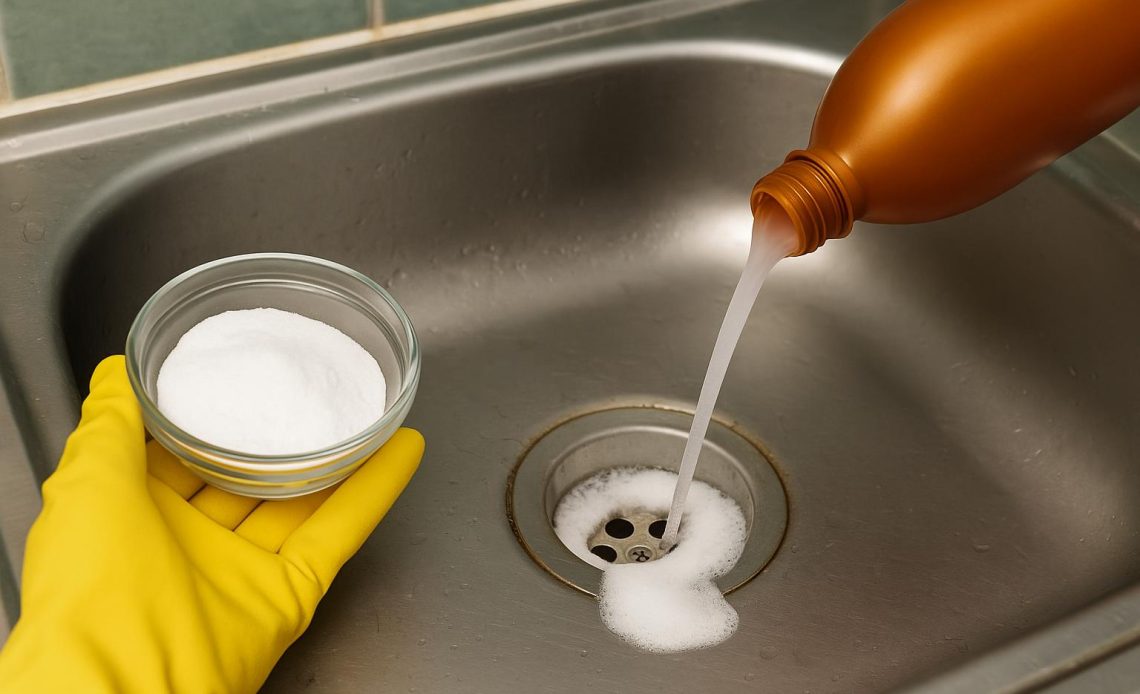
Baking soda and white vinegar are commonly used for light drain cleaning. The reaction creates fizzing that can help agitate loose residue, followed by a water flush that carries loosened material away. However, this isn’t a solution for every type of blockage or odour.
If you use household cleaning products, never mix different chemical drain cleaners or combine incompatible cleaning chemicals.
D. Check the Trap
If the smell comes from a rarely used fixture, check whether the trap has dried out. Running water through the fixture can restore the water seal and prevent drainage odours from entering the room. If the smell disappears after restoring the water seal but returns again later, the trap could be losing its seal repeatedly. That warrants further investigation.
E. Check the Gully Trap
If the smell is coming from outside, check the property’s gully trap. A dry trap can allow unpleasant drainage odours to escape.
Adding water can restore the water seal. If the gully is already holding water but still smells strongly, or if it repeatedly dries out, a plumbing inspection can help identify the reason.
F. Use a Drain Snake for Minor Blockages
A drain snake can remove some accessible blockages by physically breaking up or retrieving material inside the pipe. It can be useful for localised buildup in suitable household waste pipes.
If you’ve tried to clear a drain and the smell or slow drainage keeps returning, it’s better to have a professional identify the cause and treat the symptoms.
When DIY Drain Cleaning Isn’t Enough
Knowing how to fix a smelly drain also means knowing when cleaning isn’t going to solve the problem. A persistent odour can indicate an issue further along the drainage system, particularly when other symptoms appear at the same time.
A. Persistent Smells
If you’ve cleaned the drain and the smell returns within a short period, the source could be deeper inside the pipe. Repeatedly cleaning the drain opening won’t resolve a major blockage, damaged pipe or drainage fault further along the system.
B. Sewage Odours
A strong sewage or rotten-egg smell deserves attention, particularly when it comes from an indoor drain. A dry trap can be responsible, but persistent sewage odours can also indicate a drainage problem. Ventilate the affected area and avoid trying to cover the smell with stronger cleaning products. If the odour persists, have the drainage system inspected.
C. Slow Drainage
A slow drain combined with an unpleasant smell can indicate a partial blockage. The pipe might still allow some water through while retaining enough debris and wastewater to produce an odour. If several fixtures start draining slowly, the problem could be further along the drainage system.
D. Gurgling
Gurgling from a drain can indicate that air and wastewater aren’t moving through the drainage system normally. When it occurs alongside a bad smell or slow drainage, it provides another reason to investigate the drainage line.
E. Recurring Blockages
If you repeatedly clear the same drain only for it to block again, there could be an underlying problem such as tree roots, heavy pipe buildup or damaged drainage. Professional drain-clearing equipment and CCTV inspection can help identify what is actually causing the recurrence.
F. Multiple Drains Affected
When several drains begin smelling or draining slowly at the same time, cleaning each fixture individually might not solve the problem.
Multiple affected fixtures can indicate an issue further along the sanitary drainage system. In these circumstances, professional assessment is more appropriate than continuing with household cleaning methods.
G. Wastewater Backing Up
Wastewater backing up through a sink, shower, floor waste or another fixture is a more serious warning sign. Stop using affected fixtures and arrange professional assistance.
If you are experiencing a drainage problem, SA Water advises against using household appliances such as washing machines while the issue is occurring because additional wastewater can worsen the situation.
If the blockage is within the property’s private plumbing, a licensed plumber Adelaide can investigate it. If the blockage is in the public sewer system, SA Water is responsible for clearing it.
Conclusion
Knowing how to clean smelly drains starts with a few simple steps. The methods mentioned above can help with minor buildup, but they won’t resolve every cause of a smelly drain. Persistent sewage odours, recurring blockages, multiple affected fixtures and wastewater backups indicate a deeper drainage problem.
If DIY cleaning doesn’t resolve the smell, Adelaide plumbers can inspect the drainage system and decide on the right solution to help prevent the problem from coming back.