
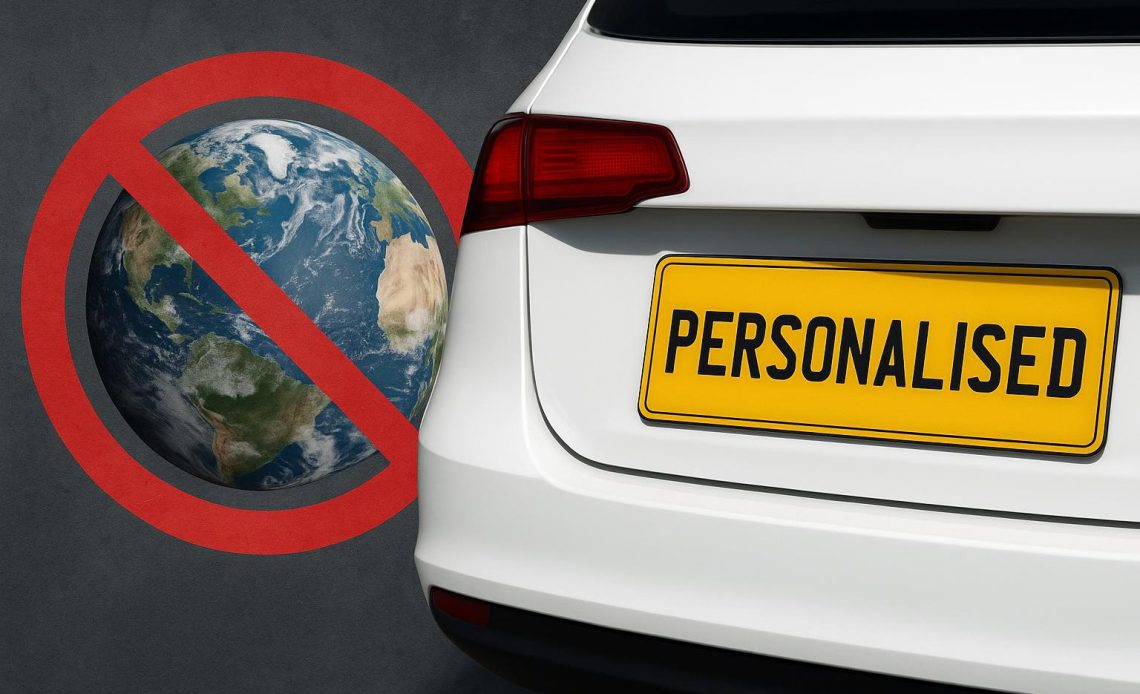
Customised number plates have long been a way for drivers to show off their personality, commemorate special dates, or simply stand out on the road. From clever wordplay to initials and inside jokes, these plates often add a touch of flair to an otherwise standard vehicle. But in some parts of the world, governments are clamping down on this form of personalisation — and it’s prompting a bigger question: could the UK eventually follow suit?
The Appeal — and Controversy — of Custom Plates
For many motorists, a personalised plate is more than just a novelty; it’s a statement of identity. Whether it’s a play on a name, a cheeky phrase, or a clever pun, these plates can feel like an extension of the driver themselves. In some cases, they’re even considered status symbols or valuable investments.
However, not everyone sees them in a positive light. Critics argue that personalised plates can be distracting, inappropriate, or even offensive — depending on what they say and how they’re interpreted. What one person finds funny or harmless, another may view as vulgar or politically charged. In a world that’s becoming more culturally sensitive, this has led to increasing scrutiny.
Why Are Some Countries Banning Them?
A growing number of countries are either banning or severely limiting personalised registrations — and the reasons vary.
In Germany, certain letter combinations are banned outright due to their associations with the Nazi regime. It’s a matter of historical sensitivity, and authorities take no chances when it comes to preventing the misuse of public displays.
Sweden and Norway have implemented strict rules around language, banning any combinations that could be considered offensive, sexually suggestive, or politically controversial. Even seemingly innocent phrases have been turned down — all in the name of public decorum.
Elsewhere, in Hong Kong, personalised plates are legal and even auctioned for large sums, but characters that resemble numbers or cause visual confusion are prohibited. The goal is to avoid mix-ups that could affect law enforcement or registration systems.
Then there’s Greece, where official custom plates aren’t available — but an underground market reportedly thrives. Certain drivers manage to acquire plates through informal channels, raising concerns about inequality and a lack of transparency.
The UK’s Position — and the Role of Regplates
The UK currently allows personalised number plates, and they’re immensely popular. Each year, thousands of custom plates are issued, and the DVLA regularly auctions off the most desirable combinations. Yet the system is far from a free-for-all.
Twice a year, the DVLA reviews potential combinations and filters out anything deemed offensive, crude, or inappropriate. Terms related to hate speech, violence, and even risqué innuendo are blacklisted before ever hitting the market.
This process directly impacts businesses like Regplates, a major UK provider specialising in custom vehicle registrations. For companies like these, compliance with DVLA standards is essential. Regplates works closely with clients to secure unique, memorable plates while staying within the legal and ethical boundaries set by the government.
Despite the tight rules, demand remains strong. Whether for investment, branding, or personal flair, Regplates continues to be a go-to source for drivers looking to make their vehicles stand out — within the rules, of course.
Could the UK Tighten Its Rules?
While the UK hasn’t suggested any plans to ban personalised plates outright, growing sensitivity around public messaging might influence future policy. It’s not hard to imagine a scenario where controversial combinations start slipping through the net and attracting complaints — leading to tighter restrictions or even a phased rollback of customisation.
There’s also the broader conversation about equality. Critics argue that personalised plates represent another way for wealthier drivers to differentiate themselves. In a cost-of-living crisis, spending thousands on a vanity registration can feel tone-deaf or elitist, potentially fuelling public disapproval.
Additionally, there’s the issue of digital surveillance. As number plate recognition technology becomes more prevalent, especially in policing and urban traffic management, governments may favour uniform formats for clarity and operational efficiency.
A Future of Fewer Choices?
If other countries are anything to go by, it’s entirely plausible that the UK could face pressure to follow suit — perhaps not with a total ban, but with more restrictions and automated systems that screen for hidden meanings or culturally sensitive references.
For now, though, drivers still have the freedom to personalise their vehicles — within reason. Companies will continue to help customers navigate the line between creativity and compliance, ensuring they get a plate that’s both original and acceptable.
Whether that freedom shrinks in the future may depend less on what’s considered funny and more on how society continues to redefine what’s considered appropriate in public view.