
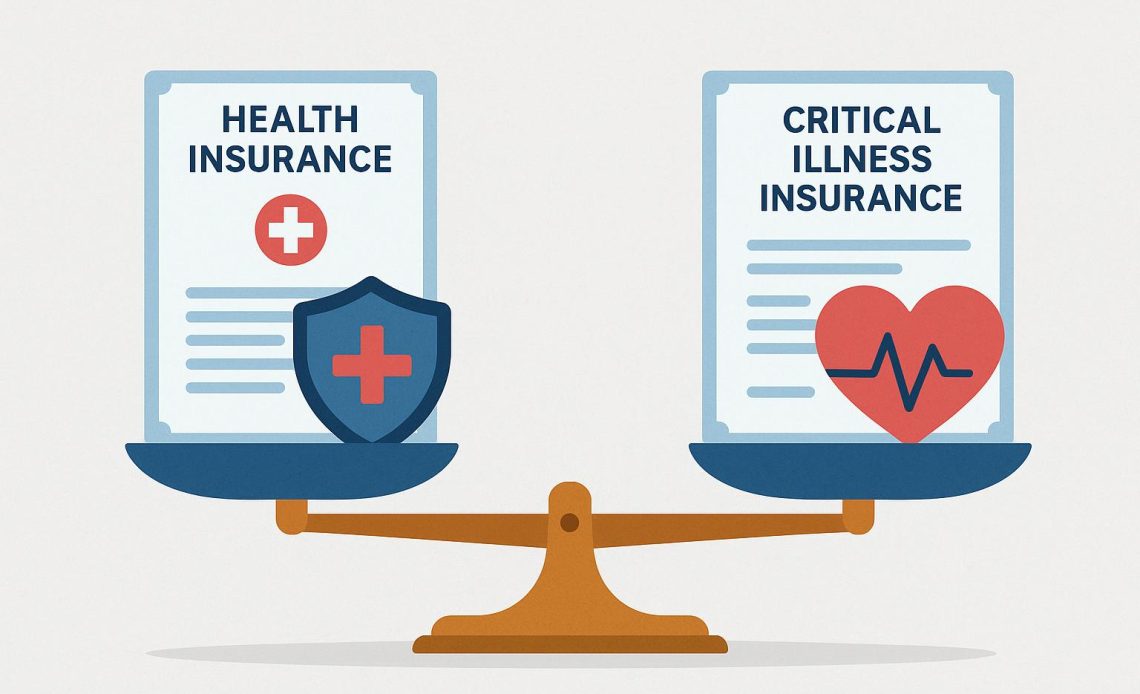
When it comes to protecting yourself financially against medical emergencies, having the right medical insurance is important. While many people are familiar with regular health insurance policies, not everyone understands what a critical care insurance policy is and how it differs from a standard health plan.
Both types of coverage serve important purposes, but they work in different ways. Understanding the difference between health insurance vs critical care insurance can help you make the perfect choice for your financial security.
Key Differences: Health Insurance vs Critical Illness Insurance
Type of Plan and Benefit Structure
The most basic difference lies in how these policies pay you. Regular health insurance works as an indemnity plan, which means it covers your actual medical expenses up to the policy limit. Once you have submitted your hospital bills, you will be reimbursed for the money that you have spent.
Critical care insurance, on the other hand, is a benefit-based plan. This means you receive a lump sum amount when you’re diagnosed with a covered illness, regardless of your actual expenses.
Coverage and Illnesses Included
Health insurance policies provide broad coverage for various medical situations. It typically covers hospitalisation costs, doctor fees, medicine expenses, diagnostic tests and ambulance charges. Some insurance policies also include maternity benefits and coverage for accidents.
Critical illness insurance is more focused and specific. It covers only serious conditions like cancer, heart attack, kidney failure, stroke, paralysis and organ transplants.
Waiting Period Requirements
Both types of insurance come with waiting periods, but they work differently. In regular health insurance, you typically wait 30 to 90 days before coverage begins for most illnesses. For pre-existing diseases, the waiting period can be 1 to 4 years.
Critical illness insurance usually has a 90-day waiting period from the policy start date. Additionally, critical care insurance includes a “survival period” – you must survive for 14 to 30 days after diagnosis before the claim is paid.
Premium Costs and Policy Duration
Health insurance generally has higher premiums because it offers comprehensive coverage for many types of medical situations. These policies are usually bought for one year and need to be renewed annually.
Critical illness insurance has comparatively lower premiums since it covers only specific diseases. However, these policies are often purchased for longer terms, like 10, 15 or 20 years, which provides long-term protection.
Claim Settlement Process
The claim process is quite different for both policies. With health insurance, you can either go cashless at network hospitals or pay first and claim reimbursement later by submitting bills and reports. You can make multiple claims until your sum insured is exhausted.
For critical care insurance, once you’re diagnosed with a covered illness and survive the survival period, you file one claim with diagnostic reports. After verification, you receive the entire sum assured in one payment, and the policy typically ends.
Conclusion
Both medical insurance policies and critical illness plans are important for protecting your money when medical emergencies happen. Regular health insurance takes care of your hospital bills and treatment costs for various health issues. On the other hand, critical care policy provides you with a lump sum payment when you’re diagnosed with serious diseases like cancer or a heart attack.
Having a health plan for your everyday medical needs, along with critical illness cover for major health problems, gives you complete protection. This combination makes sure you’re ready to handle any health challenge that comes your way without stressing about how you’ll pay for it.